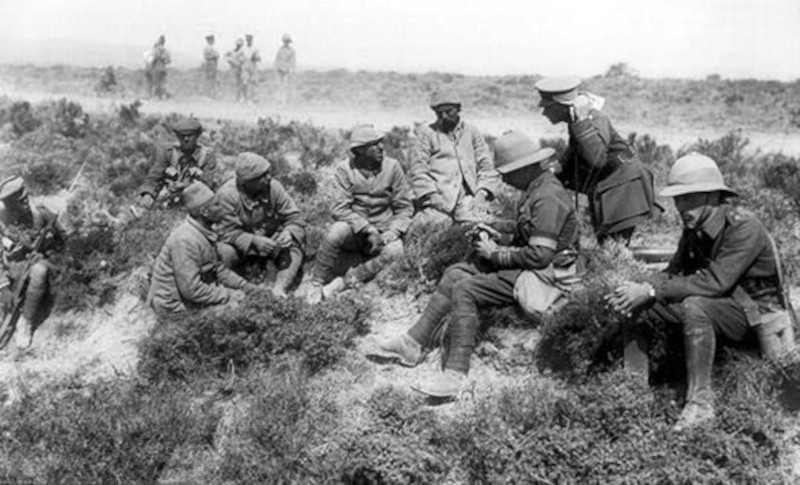
The Gallipoli Campaign was a critical turning point that changed the course of World War I. The Seddülbahir Front constitutes one of the bloodiest and most significant phases of this immense struggle. The battles that began on April 25, 1915, and continued for months on this front were not merely a stage for military tactics but also a theater where the fates of nations were determined. This article will examine why the Seddülbahir Front was so crucial, analyzing its strategic objectives, defensive and offensive plans, and its impact on the overall outcome of the campaign.
1. Strategic Location and Objectives
Seddülbahir is situated at the southern tip of the Gallipoli Peninsula, at the mouth of the Dardanelles Strait opening into the Aegean Sea. The primary reason the Allied Powers (Britain and France) selected this region as their landing point was to reach the critical stronghold of Kilitbahir Plateau and the artillery batteries positioned there. According to the plan devised by General Sir Ian Hamilton, the troops landing on the beaches of Seddülbahir had the primary objective of capturing Alçıtepe (Achi Baba) and then advancing toward the Kilitbahir Plateau. Once these batteries were silenced, the Dardanelles Strait would be opened to the Allied Navy, posing a mortal threat to the entire region, especially the Ottoman capital, Istanbul. Thus, the Seddülbahir Front was the main gateway determining the fate of the Gallipoli Campaign. Furthermore, due to the narrow beaches of the region, landings were carried out at five separate points: Sığırini, Ertuğrul, Tekke, İkiz, and Zığındere coves.
2. Ottoman Defensive Strategy
The most critical factor in the success of the Ottoman defense was the "defense in depth" tactic implemented by Marshal Liman Von Sanders. The bulk of the troops were held not on the coastline but in the rear. This strategy allowed for intervention at the most suitable point after the direction of the enemy landing became clear. The 9th Division, responsible for defending the region, was commanded by Colonel Halil Sami Bey, who deployed the 26th Regiment around Seddülbahir and the 27th Regiment further north near Kabatepe. Additionally, Liman Von Sanders's strict order that troops should remain invisible during daylight hours largely neutralized the reconnaissance efforts of the Allied forces. The fact that even captured Ottoman soldiers after the landings could not provide clear information about the strength of the forces in the region demonstrates how successful this strategy was.
3. The Most Significant Battles of the Front
The battles on the Seddülbahir Front resulted in the Allied Powers being unable to break the Turkish defense despite continuous assaults.
First Battle of Krithia (April 28, 1915): In this first major offensive following the landings, British and French troops aimed to reach Alçıtepe. However, the Turkish defense and especially the counterattack launched by two battalions under the command of Lieutenant Colonel Sabri Bey forced the enemy to retreat. Allied casualties were 3,000, while Turkish losses numbered 2,380.
Second Battle of Krithia (May 6–8, 1915): During this three-day battle, despite intense artillery fire, the Allied forces failed to collapse the Turkish trenches and advanced at most 500 meters. Allied casualties reached 6,500, while Turkish losses were approximately 2,000. This demonstrated just how strong and resilient the Turkish positions were.
Third Battle of Krithia (June 4, 1915): This offensive, like the previous ones, proved unsuccessful, and the Turkish lines remained unbroken. Notably, Lieutenant Arif Tanyeri and his 150 soldiers closed the breach in the lines, and the Turkish counterattacks on June 5 prevented the front from falling. Allied casualties were around 7,500, while Turkish losses were approximately 9,000.
Battle of Zığındere (June 28 – July 5, 1915): This time, the Allied forces attacked Zığın Ridge on the left flank of the front. Although the Turkish trenches suffered heavy damage from intense bombardment, the stubborn defense and counterattacks of the Turkish troops allowed the British to gain only a few trenches. The Turkish counterattacks on July 1 and 5 were unsuccessful.
4. Impact of the Front on the Overall Outcome
The common result of all these battles was that the Allied Powers failed to achieve their objectives on the Seddülbahir Front. By the end of June, the Ottoman forces had stopped all offensives, and the front had turned into static trench warfare that would continue until the end of the campaign. The success achieved on the Seddülbahir Front had a direct impact on the overall outcome of the Gallipoli Campaign. Had this front fallen, the Kilitbahir Plateau could have been captured, control of the Strait could have been largely lost, and the road to Istanbul could have been opened. For this reason, Seddülbahir was not merely a front but also the key gateway to Gallipoli and the most important fortress of the Turkish defense.
The Seddülbahir Front, with its strategic location, successful Ottoman defensive plans, and heroic resistance, was the most critical phase of the Gallipoli Campaign. The battles on this front, which destroyed the Allied Powers' hopes of passing through the strait, thwarted their objective of reaching Alçıtepe and the Kilitbahir Plateau. The clashes that began on April 25 and continued for months inflicted heavy casualties on both sides, yet ultimately resulted in the superiority of the Turkish defense. The victory won at Seddülbahir was the greatest contributing factor to the overall victory on the entire Gallipoli Peninsula and has taken its place in history as a turning point that changed the fate of a nation.