The Most Beautiful Spots in Ephesus
The Ancient City of Ephesus is like an open-air studio for photography enthusiasts. This enchanting city, where history has accumulated layer upon layer over 9,000 years, offers a unique visual feast with every frame telling a different story. Inscribed on the UNESCO World Heritage List in 2015, Ephesus provides visitors with the opportunity to travel through time with its structures from the Hellenistic, Roman, and Eastern Roman periods, while also offering countless opportunities to capture unforgettable photographs. However, Ephesus is not just about the ancient city; surrounding points such as Selçuk Castle, the village of Şirince, and the Çamlık Train Museum add unique richness to your photography route. Here are the most special spots you must immortalize in this magical atmosphere of Ephesus and its surroundings.
The Heart of History: The Library of Celsus
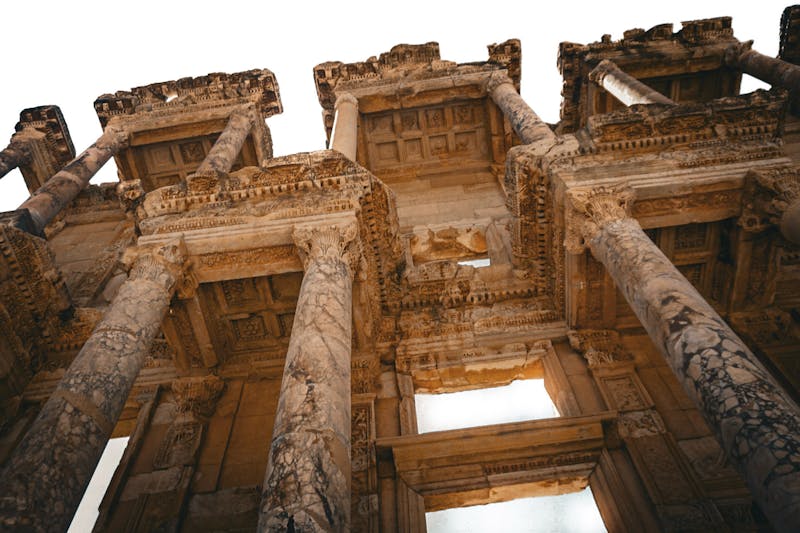
The first structure that comes to mind when Ephesus is mentioned is undoubtedly the Library of Celsus. As one of the most magnificent libraries of the ancient world, this structure is indispensable for photographers with its two-story façade and impressive columns. The play of light on the façade creates a fascinating atmosphere, especially during the early morning hours and in the evening light. The spacious square in front of the library is an ideal spot for framing this massive structure on a human scale. To fully capture the magnificence of the library, you can use a wide-angle lens to include both the entire structure and the stone pavement in front of it in your frame. The early morning hours or times close to sunset, when tourist density is at its lowest, are the most suitable moments for shooting here.
Magnificent Acoustics: The Great Theater
The Great Theater is another important structure that showcases the grandeur of Ephesus. With a capacity of approximately 25,000 people, it is one of the largest ancient theaters in the world, featuring an impressive silhouette descending from the hillside toward the sea. A photograph taken from the top steps of the theater offers a panoramic view of both the stage building and the modern Selçuk district behind it. Especially at sunset, when the redness of the sky reflects on the ancient stones, you can capture breathtaking frames. A human figure sitting on the theater's massive steps creates a wonderful composition to emphasize the structure's enormous size. This venue, also impressive in terms of acoustics, allows even a whisper on stage to be heard from the top steps, adding special meaning to photographs taken here with human figures.
Details of Ancient Life: Curetes Street and the Terrace Houses
Curetes Street, paved with marble blocks, serves as the main artery of ancient Ephesus, offering photographers the chance to feel the historical texture. The column ruins on both sides of the street, along with structures like the Trajan Fountain and the Temple of Hadrian, allow you to capture different compositions with every step. Human figures walking on the stones of the street better reflect the scale and magnificence of this historical site. The Terrace Houses are among the most special spots for photography in Ephesus. These houses, where the prominent figures of the Roman period lived, reveal the wealth and aesthetic understanding of the era. This section, which requires a separate entrance fee, awaits discovery with its preserved frescoes, mosaic floors, and details such as the heating systems of the period. The courtyards, colonnaded corridors, and wall paintings inside the houses offer unique opportunities to immortalize traces of ancient life. However, it should be noted that entry to the Terrace Houses is subject to a separate fee, and since the number of visitors is limited, it would be beneficial to go early in the morning.
Wings of Victory: The Nike Statue
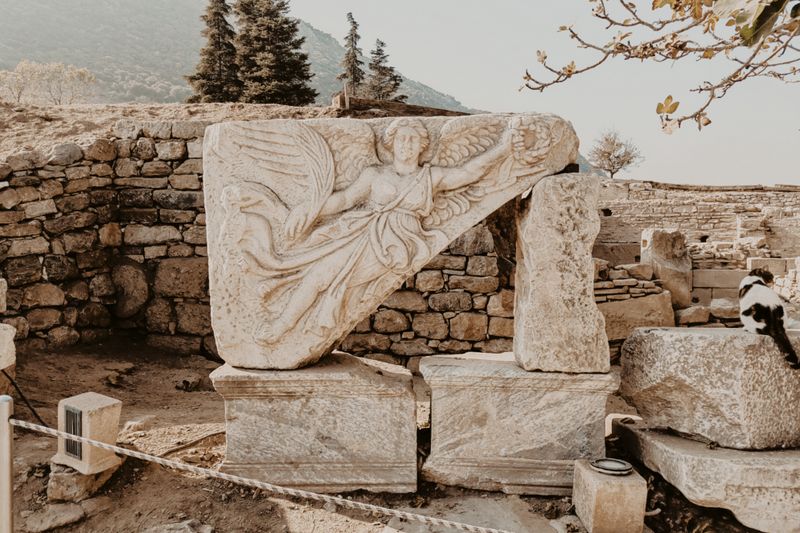
One of the most special artifacts to photograph in Ephesus is undoubtedly the Nike Statue. Known in Greek mythology as the goddess of victory, Nike is depicted as a winged female figure and was considered the symbol of victory in the ancient world. Located near the Domitianus Square within the Ancient City of Ephesus, this statue offers photographers the opportunity to capture mythology and art together. The most striking feature of the Nike Statue is the winged structure of the goddess and her dynamic pose. These details create an impressive visual spectacle, especially when daylight hits the curves of the statue. The area where the statue is located, considered together with the surrounding ancient structures, is ideal for both close-up detail shots and wide-angle compositions. Nike's wings add a dramatic atmosphere to photographs, allowing you to visualize the ancient world's understanding of victory. The importance of this statue in Ephesus is further enhanced by the fact that it inspired the logo of a world-famous sports brand today, enriching your photograph with both historical and cultural significance.
The Heart of Ancient Social Life: The Public Latrines
The Public Latrines, an unusual yet equally interesting spot for photography in Ephesus, offer a unique window into the social life of the ancient Roman period. Located right next to Curetes Street, adjacent to the Scholastikia Baths, this structure provides visitors with the opportunity to visualize the engineering and socializing understanding of daily life in the Roman Empire. The latrines, with their marble-carved seating sections and the sewage system flowing beneath them, reveal the advanced hygiene understanding of the period. The most striking detail here is that the toilets are arranged side by side. Ancient Romans used these spaces not only for relieving themselves but also for socializing, chatting, and even conducting business meetings. In other words, this place was a kind of social club of the ancient world. Along with this interesting historical information, the recesses in front of the marble seating blocks, the channel traces on the floor, and the water installation remains on the walls are exquisite details waiting to be captured with a camera. From a photographic perspective, the Latrines are a perfect subject, especially for black-and-white shots. The worn texture of the marble blocks over time, the semi-illuminated atmosphere of the space, and the layered traces of history allow you to capture dramatic and meaningful frames.
In the Footsteps of the Goddess: The Temple of Artemis
Although the Temple of Artemis, considered one of the Seven Wonders of the World, now stands only with a few column ruins, it is a fascinating place to imagine and photograph its former magnificence. The single column that has survived to the present day rises in a marshy area, offering a postcard-perfect view with the Ayasuluk Hill and Selçuk Castle in the background. In particular, aerial or elevated shots create a unique composition with this column and the surrounding green area. Photographing the Temple of Artemis is one of the most enjoyable ways to feel the grandeur of the ancient world during your Ephesus visit.
The Crown of Selçuk: Selçuk Castle
One of the most important points not to be overlooked when photographing Ephesus is undoubtedly Selçuk Castle. Located at the summit of Ayasuluk Hill, overlooking thousands of years of Ephesian history from above, this castle offers photographers a unique perspective. Built during the Byzantine period and also used during the Ottoman era, the castle resembles a medieval painting with its walls, towers, and structural remains inside. Photographs taken from the castle's peak bring together the bird's-eye view of the Ancient City of Ephesus, the remains of the Temple of Artemis, and the Selçuk plain in a single frame. Especially at sunset, the golden light filtering through the castle walls and the peaceful atmosphere spreading over the plain add a dramatic and romantic touch to your photographs. Although climbing Selçuk Castle requires some effort, the panoramic views you will obtain and this historical structure integrated with the ancient city will add depth and richness to your shots. The cistern remains inside the castle, the small church, and the narrow passages between the walls offer great opportunities for detail photography.
The Steam Heritage of History: Çamlık Open-Air Steam Locomotive Museum
Located just 7 kilometers from the Ancient City of Ephesus, in the village of Çamlık, this museum is a true open-air history lesson for photographers. Opened to visitors in 1997, the museum is built on a section of the old İzmir-Aydın Railway, Turkey's oldest railway line. The museum exhibits over 30 locomotives that have witnessed history, along with the original railway line built in 1866. One of the most special of these locomotives is the wagon used by Atatürk in 1937 when he came to Çamlık to watch the Aegean Maneuvers. This wagon, displayed in its original condition with all its equipment, adds a historical touch to your photographs. The museum also features 4 cranes, water pumps, a diesel transport tank, open and closed passenger wagons, a toilet dating back to 1850, and an old tunnel 900 meters long. For railway enthusiasts, this museum is literally a paradise. With the details of giant steam machines, its historical texture along the tracks, and its nostalgic atmosphere, the Çamlık Train Museum adds a different perspective to your Ephesus visit, blending with industrial history.
The Silence of Pilgrimage: The House of Virgin Mary
Another important site of Ephesus, the House of Virgin Mary, is a significant pilgrimage center in the Christian world. Located at the foothills of Mount Bülbül, in a peaceful forest, this small stone house offers a mystical and serene atmosphere for photographers. The garden in front of the house, with its lush nature and historical texture, allows you to capture tranquil frames. The House of Virgin Mary appears as if from another world, especially in the early morning hours when the mist clears. Photographs taken while pilgrims pray in front of the house or leave notes on the wish wall in the garden best reflect the atmosphere of this sacred place.
The Village Where Time Stands Still: Şirince
Located right next to Ephesus, in the Selçuk district, the mountain village of Şirince is another stop that should not escape a photographer's lens. Once called "Çirkince" (meaning "rather ugly"), this village resembles a movie set with its white Greek houses, narrow stone streets, and lush nature. Declared a natural protected area in 1986, Şirince takes visitors on a journey through time with its historical houses preserving 19th-century architecture. The most ideal spot for photography in Şirince is the viewing terraces offering a panoramic view of the historical houses scattered across the village slopes. Especially at sunset, the golden light of the sun striking the white houses allows you to capture mesmerizing frames. The narrow streets inside the village, doors adorned with bougainvillea, stone walls, and wooden bay windows offer a different composition at every turn. Şirince's historical churches, the Church of John the Baptist and the Church of Demetrius, also attract photographers with their architectural details. Additionally, the village's famous wine houses, with their colorful bottles and rustic decorations, are ideal for enjoyable detail shots. Şirince's unique atmosphere offers not only natural and architectural beauty but also an interesting story, having become world-famous with the 2012 Mayan apocalypse scenario, adding another layer of meaning to your photographs. Ephesus is a unique treasure for anyone passionate about photography. In this ancient city where every corner whispers a different story, shots combined with the magnificence of Selçuk Castle, the victory wings of the Nike Statue, the extraordinary social life story of the Latrines, the industrial nostalgia of the Çamlık Train Museum, and the timeless beauty of Şirince will serve to carry thousands of years of heritage into the present day.
Last Modification : 10/16/2026 1:41:02 AM