Tarsus
Tarsus: The Cradle of St. Paul and a Crossroads of Civilizations
In the dusty pages of history, in the south of modern-day Turkey, near the eastern coast of the Mediterranean, lies the city of Tarsus. Today a district of Mersin province, this ancient city is far more than just an old settlement; it holds worldwide fame as the birthplace of one of the most important figures in Christian history—the Apostle Paul (Saint Paul). Beyond its profound influence on Paul's life and theology, Tarsus stands out as a cradle of civilization, boasting a rich history and cultural heritage spanning thousands of years.
The Historical Journey of an Ancient City
Tarsus is recognized as one of the oldest continuously inhabited settlements in human history, with roots stretching back to the Neolithic period. The city was founded on the banks of the river known in antiquity as the Cydnus—today called the Berdan River—which provided it with favorable conditions for both agriculture and commerce. Throughout history, Tarsus came under the rule of major powers such as the Hittites, Assyrians, Persians, and Alexander the Great. Its strategic position along trade routes ensured that it remained a center of wealth and cultural diversity in every era.
In the 1st century BC, the city came under Roman rule and gained great importance as the capital of the Cilicia region (caput Ciliciae). During this period, Tarsus was not only an administrative center but also a significant intellectual hub that rivaled Athens and Alexandria in the fields of philosophy and education. This cosmopolitan structure and cultural richness would play a critical role in shaping the intellectual world of Paul, who would later be born and raised here.
The City of Paul's Birth: A Roman Jew
Saint Paul, born Saul, came into the world around AD 5 in Tarsus, as the son of a noble Jewish family that held Roman citizenship. These two identities are vital to understanding his life and mission. On one hand, he was a devout Jew educated in the synagogue, deeply devoted to the Torah; on the other, he was a Roman citizen, which granted him the freedom to move and communicate across the vast Roman Empire. This privilege would later provide him with a significant advantage during his arduous journeys and his efforts to spread Christianity, even reaching as far as Rome.
Paul received his early education in Tarsus before being sent to Jerusalem for advanced study in Jewish law and theology. There, he studied under the foremost religious scholars of the time and became a zealous Jew belonging to the Pharisee sect. In his early years, he fiercely opposed the followers of Jesus, pursuing and punishing them. However, his famous vision on the road to Damascus would radically transform his life and set him on the path to becoming Christianity's most influential advocate.
The Cultural Mosaic and the Shaping of Theology
The cultural richness of Tarsus stemmed not only from its status as an educational center but also from its diverse population, where many different faiths and mystery cults coexisted. During Paul's time, Tarsus was home to various belief systems from both East and West, including the cults of Isis, Cybele, Zoroastrianism, and particularly the cult of Heracles (Hercules). Among these, the Heracles cult dedicated to Sandon—the city's protective god—stood out with its mythology of a "dying and rising god." Grand fire ceremonies symbolizing the god's death were held each autumn, and his resurrection was celebrated in the spring.
According to some scholars, young Paul's exposure to these pagan rituals may have influenced his interpretation of the message of Jesus Christ's crucifixion and resurrection. Tarsus's syncretic religious atmosphere may have paved the way for Paul to develop a universal message of salvation open to all humanity. The theme of salvation offered to all people through the death and resurrection of the Messiah—emphasized in his letters—is considered by some to be a reflection of Tarsus's religious pluralism.
Tarsus's Place in Christian History and Its Modern Reflections
After his conversion, Paul embarked on long journeys across Anatolia, Greece, and even Rome to spread his faith, and his epistles laid the foundations of Christian theology. His efforts were decisive in Christianity's separation from Judaism and its emergence as an independent religion, which is why he is regarded—along with Saint Peter—as one of the founding fathers of the Church. Beyond being Paul's birthplace, Tarsus remained an important religious center in the early Christian period, producing numerous bishops and martyrs.
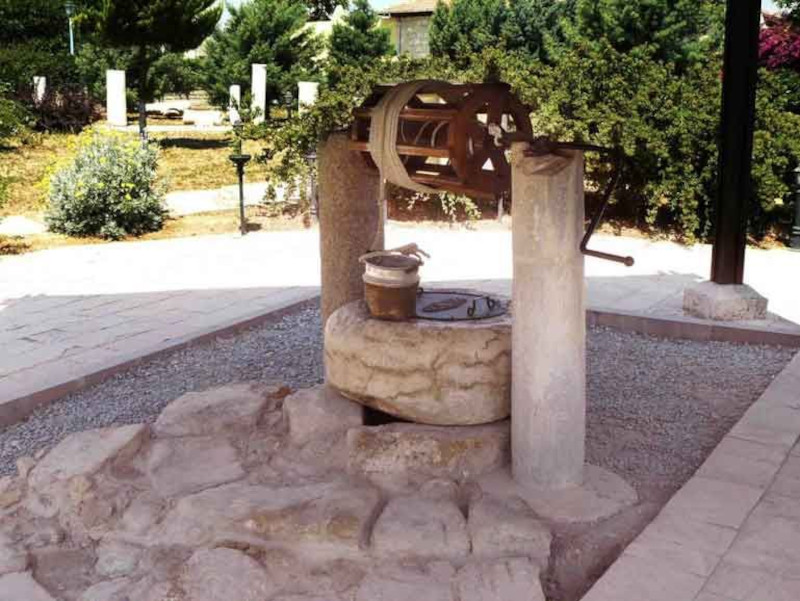
Today, Tarsus is a significant pilgrimage destination for the Christian world. The Church of St. Paul—known as the Saint Paul Memorial Museum and listed on UNESCO's Tentative World Heritage List—along with St. Paul's Well, are the city's most important faith tourism sites. The church, rebuilt in 1862 and designed as a three-aisled basilica, is adorned with frescoes depicting Jesus and the four Evangelists. The historic well, nearly 38 meters deep, located in the courtyard traditionally considered to be Paul's home, is regarded by visitors as a sacred source of water. Every year, numerous Christians visit Tarsus to be baptized here and to embark on a pilgrimage in the footsteps of the Apostle.
In conclusion, Tarsus is not merely the birthplace of Saint Paul but also a unique historical stage where his intellectual and spiritual world was shaped, and where different cultures and faiths intertwined. This ancient city represents far more than the biography of a religious figure; it embodies a mosaic of millennia-old civilizations and a turning point in the history of faith.
Last Modification : 10/16/2026 1:40:39 AM