The 6 Most Critical Moments of the Gallipoli Campaign
The Gallipoli Campaign, which lasted from April 25, 1915, to January 9, 1916, went down in history as one of the bloodiest fronts of World War I. This large-scale amphibious operation, planned under the leadership of Winston Churchill, aimed to capture Istanbul, knock the Ottoman Empire out of the war, and open a supply route to Russia. Contrary to expectations, however, this bloody struggle, which dragged on for eight months, ended in failure with hundreds of thousands of casualties on both sides. Here are the six most critical moments that determined the fate of this long and arduous campaign. The first two of these moments shed light on the naval victory, which featured the strategic genius of a minelayer and the superhuman effort of a corporal, while the others illuminate the bloody turning points of the land battles.
1. March 8, 1915: The Secret Operation of the Minelayer Nusret
The first and perhaps most strategically critical moment of the campaign occurred long before the landings, on the night of March 8, 1915. The Ottoman command decided to lay a minefield in Erenköy Bay (Dark Harbor) , where the Allied fleet frequently maneuvered. This decision was as much a product of strategic genius as Mustafa Kemal's later counterattack: the mines were to be laid not perpendicular to the strait but parallel to the shore, placed so as to intersect the line where enemy ships made their turning maneuvers. This critical mission was given to the minelayer Nusret, under the command of Captain Tophaneli İsmail Hakkı Bey. Despite being ill, Captain Hakkı Bey accepted the mission and, operating in complete secrecy, laid 26 mines, each containing 80 kg of explosives, at the targeted location. This minefield went undetected by Allied reconnaissance ships for days. British General Oglander later said of this operation: "The day, which had begun so auspiciously, ended in complete failure due to the success of this unknown minefield... The effect of these twenty mines on the fate of the campaign is immeasurable." Winston Churchill, years later, would confess the global impact of this minefield, stating: "The main reason so many people died in the First World War... was those twenty-six iron pots swinging at the end of that thin steel cable laid by the Turks that night."
2. March 18, 1915: The Collapse of the Naval Operation and the Miracle of Corporal Seyit
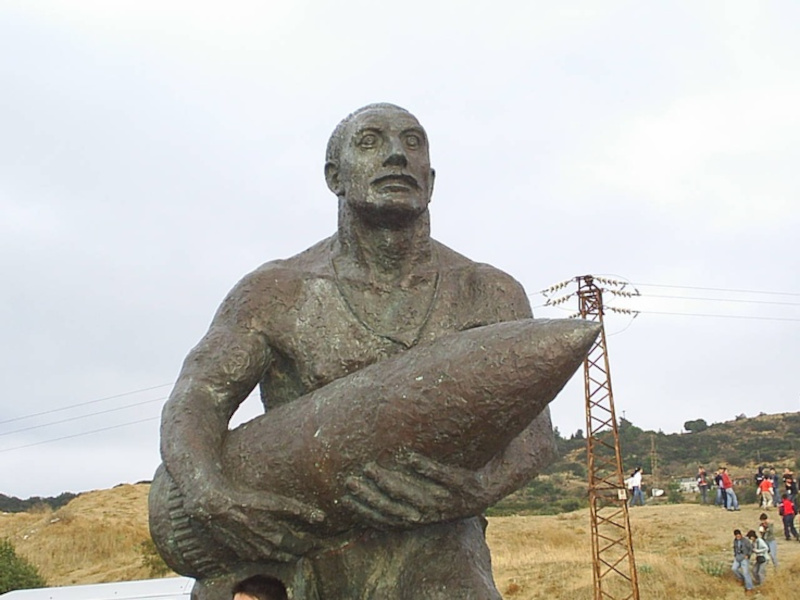
March 18, 1915, witnessed not only the collapse of the naval operation but also a story of heroism. The Allied plan to force the strait with their navy and silence the coastal batteries began with an intense bombardment from the morning hours. However, the minefield laid by the Nusret proved to be a deadly trap for the Allied fleet. The French battleship Bouvet and the British battleships HMS Irresistible and HMS Ocean struck these mines and sank within a short time. Hundreds of sailors lost their lives. Right in the midst of this chaos, artillery private Seyit Ali (Çabuk), stationed at the Mecidiye Bastion on the Rumelian shore, performed his historic act of heroism. The enemy bombardment had destroyed the bastion; only one gun remained operational, and the winch system used to load its shells had been shattered. With the help of his comrade Ali from Niğde, Seyit hoisted a shell weighing approximately 215–276 kilograms onto his back, climbed the steps, and loaded it into the gun barrel. Of the three shots he fired in succession, the third struck the rudder mechanism of the HMS Ocean. The crippled ship drifted onto one of the Nusret's mines and sank. Corporal Seyit was awarded the rank of Corporal (Onbaşı) for his extraordinary effort. Interestingly, he was later unable to lift the same shell for a commemorative photograph, which demonstrates the extraordinary strength that faith and love of country had bestowed upon him in that moment. The dual success of this naval engagement—the mines and Seyit's shot—clearly demonstrated that the strait could not be forced by naval power alone, making a larger and bloodier land campaign inevitable. This decision also bought critical time for the Ottoman defense.
3. April 25, 1915: The Bloody Landings and Mustafa Kemal's Intervention
The third critical moment of the campaign was the landings that began on the morning of April 25. Allied forces attempted to come ashore at two main points: Seddülbahir and Arıburnu (ANZAC Cove). However, the ANZAC troops landed about 2 kilometers north of their intended target, on a steep and rugged coastline. This error caused the troops to become scattered and disorganized. The truly critical moment, however, was the decision made by the young commander, Mustafa Kemal. Realizing that the landing was not a feint, Mustafa Kemal launched a sudden and decisive counterattack with his 57th Regiment against the ANZAC troops advancing toward Conkbayırı. This intervention, immortalized by his famous order, "I do not order you to attack, I order you to die," prevented the Allied forces from capturing the high ground and gaining strategic superiority. On the same day, at Seddülbahir's V and W Beaches, a similar massacre unfolded. Soldiers attempting to disembark from the ship "River Clyde" were met with intense Ottoman defensive fire, and of the first 200 men, only 21 reached the shore. April 25 ended as a Pyrrhic victory for the Allies, resulting in heavy losses but securing a beachhead.
4. May–August 1915: The Bloody Stalemate at Krithia and the Trench Warfare
Following the landings, the war devolved into trench warfare reminiscent of the Western Front. Allied forces aimed to advance from their narrow coastal footholds to capture the village of Krithia and the strategic high ground of Achi Baba. Three major offensives, launched between April 28 and June 4, failed to break the Ottoman defensive lines and were repulsed each time with heavy casualties. These bloody and inconclusive battles led to a prolonged stalemate and a brutal war of attrition between the two sides.
💥 Shells Colliding in Mid-Air: A Symbol of the Battle's Intensity
It was during these days of stalemate that an unprecedented event occurred in the skies over Gallipoli. At a moment when thousands of soldiers on both sides of the trenches were firing simultaneously, the trajectories of two bullets intersected at exactly the same point and time. This collision, described as a one-in-a-billion occurrence, was so violent that the metal of the bullets instantly fused together upon impact. Though these two bullets missed their intended targets—two soldiers—they became an unparalleled symbol of the sheer intensity, horror, and strange "perfection" of the battle. Had they not struck each other, they would most likely have claimed two lives. These fused bullets capture the ferocity of the fire at Gallipoli more powerfully than any statistic could. Although some experts debate whether the two bullets actually collided in mid-air or whether one struck another that was stationary, the symbolic value of the photograph and the story it tells in conveying the intensity of the front remains undeniable.
5. August 6–10, 1915: The Suvla Landing and the Failure of the August Offensive
To break the stalemate, the Allied forces launched a new landing at Suvla Bay on August 6, initiating a major offensive (the August Offensive). The plan was to advance from Anafartalar, link up with the ANZAC troops, and capture the dominant heights in the interior of the peninsula. Although this landing initially surprised the Ottoman defenses, Commander Sir Frederick Stopford's hesitation and slow movement caused a critical opportunity to be squandered. The troops failed to advance quickly enough toward the targeted Conkbayırı and other key hills. This delay allowed Mustafa Kemal to re-enter the scene. Appointed as the commander of the Anafartalar Group, Mustafa Kemal personally led a counterattack at the Battle of Conkbayırı on August 9–10, halting the Allied advance and forcing them to retreat. The victory at Suvla and Anafartalar was one of the most decisive moments of the campaign. The failure of the August Offensive all but extinguished the Allies' hopes of winning the campaign.
6. January 8, 1916: The Unique and Silent Evacuation
One of the most critical and, at the same time, most successful moments of the campaign was the evacuation. After months of stalemate, heavy losses, and the onset of winter conditions, the Allied forces decided to withdraw in December 1915. Considered one of the best-planned retreats in history, the evacuation lasted until January 8, 1916. It was conducted with such secrecy and discipline that the Ottoman forces barely noticed anything. Approximately 40,000 soldiers and tons of equipment were evacuated with almost no casualties. This successful evacuation somewhat alleviated the shame of defeat and formally brought the Gallipoli Campaign to an end.
The Gallipoli Campaign was shaped by the convergence of these critical moments: the silent and strategic mines of the Nusret, Corporal Seyit's faith-fueled shell, Mustafa Kemal's counterattack that ordered death, the bloody trench stalemate, the two fused bullets that symbolized the intensity of the fire, the failed Suvla landing, and the subsequent silent evacuation. This chain of events is not just the story of a single battle but of a turning point that profoundly affected the destinies of two different nations. Gallipoli became the crucible of Turkish national awakening, while for Australia and New Zealand, it served as a "baptism of fire" that shaped their national identities.
Last Modification : 10/16/2026 3:06:25 AM