10 Must-See Places in Gallipoli
The Gallipoli Peninsula is a sacred land that carries deep meaning not only for Turkey but for world history. This is where the epic "Çanakkale is Impassable" was written in 1915, an open-air monument where the fates of nations changed. Protected by the United Nations, the Gallipoli Peninsula Historical Park is home to countless emotionally charged sites. Here are 10 significant places you must visit in this land of remembrance.
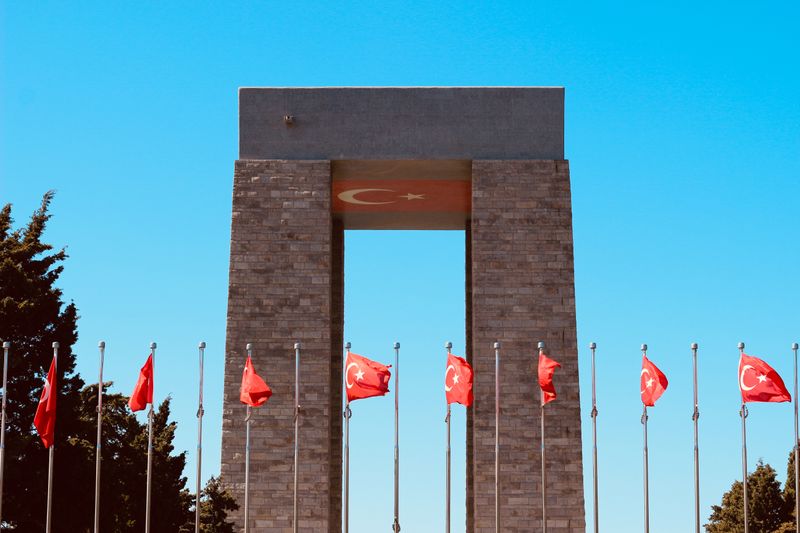
1. Çanakkale Martyrs' Memorial: Where the Heart Beats
This is the first symbol that comes to mind when thinking of Gallipoli. Rising on Hisarlık Hill overlooking Morto Bay, this massive structure commemorates 59,408 Turkish soldiers who fell in the Battle of Çanakkale. Designed by Feridun Kip, İsmail Utkular, and Doğan Erginbaş, the 41.7-meter-high memorial, with its architecture reminiscent of Roman triumphal arches, symbolizes the letter "M." The symbolic cemetery at the memorial lists the names of all Turkish martyrs of Çanakkale. When you come here, you fall silent and feel the weight of history in the chambers of your heart.
2. 57th Regiment Cemetery: The Ultimate Sacrifice
Built in memory of the 57th Infantry Regiment, which was the first to say "stop" to the enemy at the start of the land battles and changed the course of the war. This regiment was almost completely wiped out during its epic struggle at the Arıburnu Front. The cemetery is one of the most meaningful points to keep their memory alive and shows at what cost this land was defended.
3. Chunuk Bair (Conkbayırı): "I Do Not Order You to Attack, I Order You to Die"
This hill, the scene of one of the most critical moments of the war, is where Mustafa Kemal gave his famous order. Chunuk Bair is a strategic point overlooking the Arıburnu and Anafartalar sectors. Here, you will find many important stops, including Atatürk's pocket watch struck by a bullet during the war, a bronze statue of Atatürk, and the New Zealand Memorial. You must definitely visit to see the trenches where the decisions that changed the course of the war were made and to enjoy the magnificent view.
4. Anzac Cove (Arıburnu): Where Peace and Emotion Meet
The landing site of the Australian and New Zealand Army Corps (ANZAC) on the morning of April 25, 1915. Today, this cove has become a symbol of peace and shared grief, especially commemorated with dawn services every year. Sitting by the calm waters of the beach and looking out at this cove where thousands of young men once embarked on their final journey makes one deeply feel the futility of war. Don't go to this cove without visiting the nearby Kabatepe Promotion Center.
5. Kabatepe and Kabatepe Promotion Center
Kabatepe is one of the highest points in the region, located just north of the Anzac landing. Used as an observation post during the war, this hill today offers visitors a bird's-eye view of the battlefields. The Kabatepe Promotion Center is the main entrance to the Gallipoli Peninsula Historical Park. Here, you will find models of the battle, period weapons, uniforms, and maps displayed. Visiting this center before starting your tour of the region is crucial for understanding the course of the war and the front lines.
6. Seddülbahir Fortress and Region: The First Shots of the Landing
Located at the tip of the peninsula where the strait opens into the Aegean Sea, Seddülbahir was one of the main targets of the landing on April 25, 1915. Although the historic fortress was heavily damaged during the landing, it has survived to the present day. In the region, you can also see monuments of allied nations, such as the French Cemetery and the British Memorial. This is one of the points where you will feel the pain and heroism of the first days of the war most deeply.
7. Alçıtepe (Kirte) Village and Cemetery
This strategic village, one of the first targets of the war, was at the center of the clashes in the Seddülbahir region. Alçıtepe is also home to the cemetery of Yahya Çavuş, a symbol of heroic resistance from the very first moment of the enemy landing. The tranquil atmosphere of the village and its surroundings creates a stark contrast when you think of the bloody battles that took place here.
8. Kilitbahir Fortress: The Key to the Strait
Before heading to the battlefields, let's take a journey back to earlier periods of history. Built by Sultan Mehmed the Conqueror at the narrowest point of the Dardanelles (1300 meters) before the conquest of Istanbul, this fortress takes its name from the phrase "where the sea is locked." Together with Çimenlik Fortress on the opposite shore, this magnificent structure, which ensured the security of the strait, is not only a fortress but also one of the finest examples of Ottoman military architecture.
9. Namazgah Bastion and Rumeli Mecidiye Bastion
These bastions, where the most intense naval battles took place, played a key role, especially in the victory of March 18, 1915. Here, you can see the spot where the famous Corporal Seyit lifted the 215-kilogram shell onto the cannon, as well as the shell itself. There is also an open-air museum in this region displaying weapons and materials used during the Çanakkale Wars.
10. Lone Pine Memorial and Respect to the Turkish Soldier Monument: Two Sides of War
Seeing these two memorials, so close to each other yet representing two opposite ends of the spectrum in terms of meaning, is to witness one of the deepest paradoxes of human history while touring Gallipoli. The Lone Pine Memorial and Cemetery, located just south of Anzac Cove, is a sacred stop, especially for Australians. This hill, the scene of bloody clashes in August 1915, takes its name from a solitary pine tree left standing on the battlefield. The Australian Memorial and cemetery here represent one of the bloodiest fronts of the war. These lands, where thousands of young Australians lost their lives, symbolize the destructiveness of war and the peak of hostility. The young ages written on the gravestones seem to cry out the price paid for history. However, just a few kilometers away, the Respect to the Turkish Soldier Monument (Mehmetçiğe Saygı Anıtı) in the Chunuk Bair area tells a completely different story. This monument depicts a Turkish soldier giving water to a wounded ANZAC soldier. It is a story of humanity that blossomed between two strangers despite all the brutality of war. If Lone Pine is a symbol of war and division, the Respect to the Turkish Soldier Monument is the finest example showing that peace, compassion, and humanity are values that transcend even war. When you visit these two monuments one after the other, you will understand that Gallipoli is not just a battlefield but also a land of conscience where humanity meets on common ground.
Last Modification : 10/17/2026 3:28:20 AM