The Sacred Journey of the House of Virgin Mary
Approximately 7-9 kilometers from the district of Selçuk in İzmir, on the peak of Mount Bülbül, covered with olive trees and pine forests, stands a silent and modest stone structure. Although the House of the Virgin Mary remains somewhat in the shadow of centers like Jerusalem, the Vatican, or Santiago de Compostela for the Christian world, it has become a unique sacred site and symbol of peace attracting both Christians and Muslims over the last century. This article examines the layered history of the House of the Virgin Mary, from its discovery story beginning with the dreams of a mysterious nun to its current multi-faith visitor profile and its place within Turkey's religious heritage policies.
1. Discovery: A Nun's Vision and the Cross at the Excavation
The modern history of the House of the Virgin Mary begins with a nun and mystic named Anna Katherina Emmerich (1774-1824), who lived in the town of Dülmen, Germany, in the early 19th century. Emmerich, who was bedridden for a long time and believed to bear the stigmata of Christ's passion, saw detailed visions of the final period of the Virgin Mary's life. According to these visions recorded after her death by the poet Clemens Brentano, Mary left Jerusalem with the Apostle John according to Jesus' will and settled in a mountain house near Ephesus. For many years, these visions were not taken seriously. However, in 1881, a French priest, Abbe Gouyet, using Emmerich's descriptions as a guide, searched around the ruins of Ephesus and found a ruined chapel on Mount Bülbül. But this discovery was not taken seriously. The real turning point came in 1891 when French missionaries (Lazarists) in Izmir, Father Poulin and Father Jung, excavated the area based on the same visions. When they unearthed a small stone structure on the mountainside with four walls still standing but its roof collapsed, they encountered a surprising fact: they were not the only ones who considered this place sacred.
2. Where Two Faiths Embrace: Islam and Christianity
One of the most distinctive features that sets the House of the Virgin Mary apart from other pilgrimage centers is that it is considered sacred not only by Christians but also by Muslims. This fact dates back much earlier than the discovery of the site. The Lazarist priests discovered that the Orthodox Greek residents of the nearby village of Şirince (then called Kirkince) had been visiting these ruins for centuries to celebrate the Feast of the Assumption (Dormition/Assumption) of Mary on August 15th. The villagers called this place "Panaya Kapulu" (The Door to Mary). The fact that the Quran dedicates a special chapter to Mary (Virgin Mary) and praises her chastity has led Muslim communities to have deep respect for the Virgin Mary as well. Therefore, today, Muslim pilgrims visiting the House of the Virgin Mary also pray here, light candles, and drink from the holy water fountain, believing it to be healing. This makes the site a rare example of interfaith dialogue.
3. Architecture and Sacred Spaces: Inside the Modest House
Unlike magnificent cathedrals, the House of the Virgin Mary is a very simple and small structure. This cross-plan building reflects typical Roman period civil architecture. Believed to be a 6th-century Byzantine church, the structure is now used as a chapel. Appearing quite small from the outside, this stone building greets visitors inside with an "L-shaped" floor plan. In this narrow space, which was once a living area, many sacred objects are exhibited today:
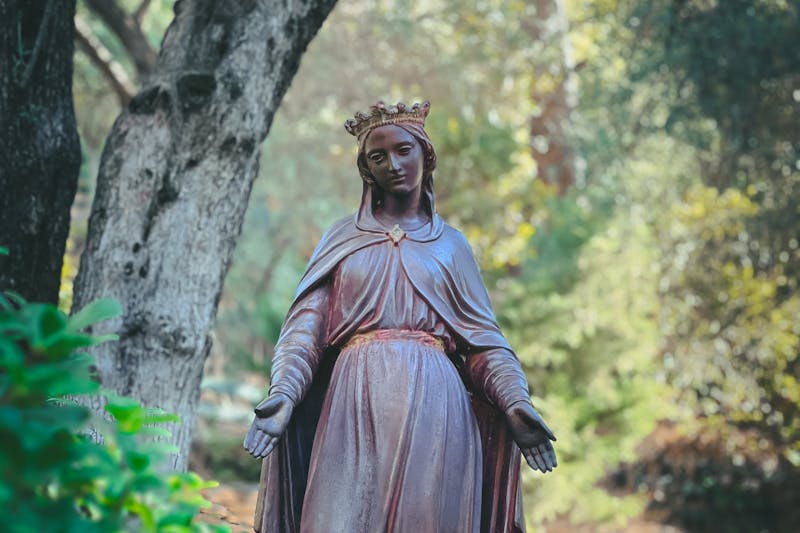
- The first thing visitors notice is the statue of the Virgin Mary at the entrance.
- On the walls hangs a photograph of the mystic nun Anna Katherina Emmerich, who inspired the discovery of the site.
- In the most emotional corner of the site are old walking canes left behind by people with walking difficulties who prayed here and believed they were healed.
- Additionally, gifts from Popes who visited the area over the years and bracelet candles that visitors purchase through donations are among the other sacred relics inside the house.
4. Visitor Etiquette and Rules
As the House of the Virgin Mary is primarily an active place of worship and pilgrimage, visitors are expected to wear attire appropriate to the sanctity of the site. Pilgrims from all over the world must pay attention to their clothing when entering this modest house as a sign of respect. However, unlike other religious traditions, there is no headscarf requirement for women here. Another important point for entry is that male visitors are required to remove their hats. When you step inside the house, the most important rule you will encounter is silence. In this narrow "L-shaped" space where thousands of people have prayed and sought healing, it is essential not to speak loudly and to maintain absolute silence. Furthermore, due to the sacred atmosphere and special status of the site, taking photos or videos inside the house is strictly prohibited. This rule is crucial both to avoid disturbing the peace of other visitors and to show respect for the sacred relics inside (such as the Popes' gifts and the statue of Mary). Visitors can take souvenir photos in the open areas outside the house, near the Wishing Wall or the Holy Water Fountains.
5. Peak of Mount Bülbül and Transportation
The House of the Virgin Mary is located on the peak of Mount Bülbül. However, there is an important point to note for those wishing to embark on this spiritual journey: It is not possible to reach the House of the Virgin Mary on foot. The steep and winding mountain roads make it necessary for visitors to use a private vehicle or a taxi. This situation is actually an advantage in preserving the site's natural texture and maintaining the peaceful atmosphere of a hermitage.
6. Entrance Fees and Official Procedures
As of 2026, the entrance fee per person for foreign visitors wishing to visit the House of the Virgin Mary is set at 700 Turkish Liras. This fee is collected by the Directorate General of Nature Conservation and National Parks, which is responsible for preserving the natural and historical fabric of the area. The collection of the fee by this institution indicates that the site is not only a religious place but also a natural and cultural asset that needs protection.
7. Mass Days and Association Contact
Religious rituals at the House of the Virgin Mary are concentrated on specific days. While masses are held regularly every Sunday, the biggest celebration of the year takes place on August 15th, considered the "Assumption of Mary" (Dormition) in the Christian world. On this special day, the area hosts thousands of local and foreign pilgrims. Furthermore, for those wishing to organize a mass for a specific commemoration, remembrance, or prayer group, special masses can be arranged by contacting the Virgin Mary Association in Izmir.
8. Structures Outside the House: From the Cistern to the Wishing Wall
The spiritual atmosphere of the House of the Virgin Mary is not limited to the inside of its four walls. Right next to the house, the historical cistern where rainwater was collected can be seen. Nearby also stretches the famous Wishing Wall, where thousands of visitors tie their wishes written on pieces of cloth or paper. However, the most remarkable features are three separate fountains, each believed to serve a different intention according to traditional belief. The water flowing from these fountains, believed to bring Health, Love, and Wealth, comes from a spring that has not dried up for centuries. Due to the common tradition of taking this water and distributing it as gifts, it is strongly recommended that you bring an empty water bottle with you before coming to the sacred site.
9. Visitor Services and Amenities
For visitors who have completed their spiritual needs, there is a small cafeteria serving in the area. Here, you can rest with drinks like tea or coffee, and also purchase icons and various souvenirs to bring the atmosphere of the site back home. Additionally, considering the high number of pilgrims coming with tour buses, there are free restrooms available on site. These facilities make the House of the Virgin Mary both a profound center of faith and a comfortable day-trip destination.
10. Papal Visits and Official Status
Although the House of the Virgin Mary has not been officially declared by the Catholic Church as the "definite place of Mary's death," the Church has recognized it as an official pilgrimage site. The biggest indication of this recognition is the visits of the highest-ranking Vatican officials, the Popes. Pope Paul VI visited in 1967, Pope John Paul II in 1979, Pope Benedict XVI in 2006, and Pope Francis in 2014, praying in this modest house during their visits to Turkey. These visits have made the site shine as a center of faith tourism internationally. In 2015, it was registered as part of the Ephesus Ancient City, which was included in the UNESCO World Heritage List. This registration underscores that the structure is not only of religious importance but also a universal cultural heritage.
The House of the Virgin Mary is an impressive example of how permeable the boundaries between faith and reason, dream and reality, can be. The 19th-century visions of a German nun transformed a forgotten pile of stones on a mountain peak in the Aegean into a harbor of peace and hope attracting millions from all over the world. Away from the magnificent marble streets and grand theater of Ephesus, this site whispers to its visitors the modest spirit of early Christianity, the silent suffering of a mother after her son, and most importantly, how two great religions can unite around a shared value. Like Mount Bülbül on whose peak it stands, the House of the Virgin Mary continues to be a garden where faiths sing on the ancient lands of Turkey.
Last Modification : 8/31/2026 11:59:27 AM