the House of the Mother Mary
Prologue
Behold, in the land of Asia, which is now called Turkey, near the ancient city of Ephesus where the Apostle John once walked, there stands a mountain named Bülbül, which means Nightingale. And on its peak, covered with olive trees and pines, a small house of stone remains silent, yet its voice has reached the ends of the earth. For many generations, this house was hidden from the eyes of men. But in the fullness of time, it was revealed not to kings nor to scholars, but to a lowly servant, a bedridden nun from the land of Germany, Anna Katherina Emmerich, who saw in visions what the Lord had kept secret for centuries. And thus began the sacred journey of the House of Mary, Mother of the Messiah, a place of peace for all nations, where Christians and Muslims bow together before the Blessed Virgin.
1. The Vision Revealed to a Humble Handmaid
In the early years of the nineteenth century, in the town of Dülmen, there lived a poor and suffering servant of God named Anna Katherina Emmerich. She lay upon her bed, weak in body but strong in spirit, and she bore upon her flesh the marks of the Passion of Christ, just as the Apostle Paul bore the marks of the Lord Jesus. And it came to pass that in her dreams, the heavens opened, and she saw the final days of Mary, the Mother of our Lord. She saw that after the Ascension of her Son, Mary did not remain in Jerusalem, for the Lord had commanded John, the beloved disciple, to take her as his own mother. And together, they journeyed across the great sea and came to the hills near Ephesus, and there they found a small stone dwelling, where Mary lived out her remaining years in prayer and silence. These visions were written down by a poet named Clemens Brentano, yet the world did not believe. But the Lord does nothing without purpose. For in the year 1881, a French priest named Abbe Gouyet, trusting in the vision, set out to find the house. And he found it, broken and buried, upon Mount Bülbül. Yet still, the world doubted. But the Lord sent a second witness. In 1891, two Lazarist fathers, Poulin and Jung, went to the same mountain and dug among the stones. And when they uncovered the four walls, they found a sign: the local villagers, who were Greeks of the Orthodox faith, had long called this place Panaya Kapulu, which means "The Door to Mary." And they had come every year on the fifteenth day of August to honor her falling asleep. Truly, the Lord had kept this place alive in the hearts of the faithful.
2. A House of Two Peoples and One Peace
Blessed is this house, for it is not a place of division but of unity. For the Lord has so ordained that both Christians and Muslims honor Mary, the Mother of Jesus. Is it not written in the holy Quran that Mary is chosen above the women of all nations? And do not the followers of Islam respect her purity and bow before her Son as the Word of God? Therefore, it has come to pass that in this small house, Christians make the sign of the cross, and Muslims raise their hands in prayer. Together, they light candles and drink from the holy spring, each seeking healing and peace. Truly, this is a sign of the age to come, when swords shall be beaten into plowshares and all peoples shall walk together in the light of the Lord.
3. The Inside of the House: Small in Size, Great in Holiness
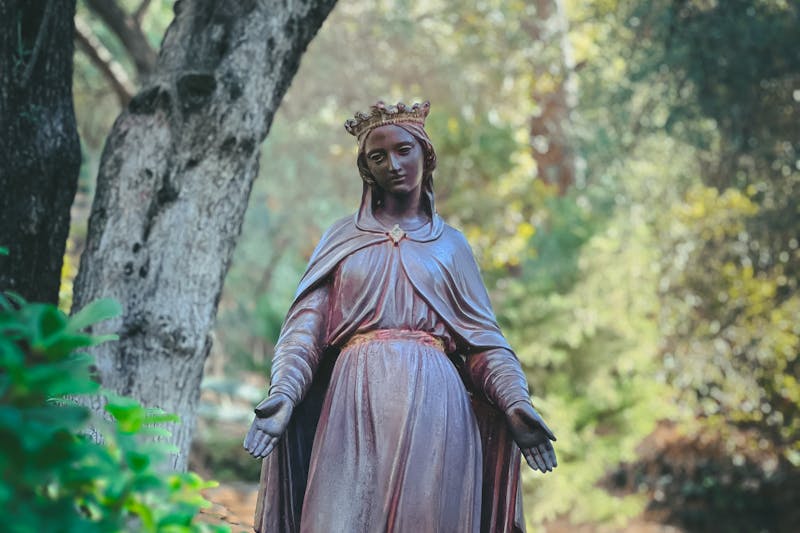
The house of Mary is not like the great cathedrals of Rome or Constantinople. It is lowly and small, for the Mother of the Lord loved humility. Its walls are of stone, and its shape is like the letter L, narrow and winding. But though it is small, it is full of holy remembrance. When you enter, your eyes first fall upon the statue of the Blessed Virgin, standing in prayer. On the wall hangs the image of Anna Katherina Emmerich, the humble nun who saw what was hidden. In the corner, a solemn sight: walking canes left behind by those who came limping and went away leaping, for they believed that Mary, by the grace of her Son, had healed them. And there also are gifts of the Popes, the shepherds of Rome, who came to kneel in this lowly place. And candles in the form of bracelets, given as offerings, burn before the altar, a sweet fragrance rising to heaven.
4. The Law of the House: Reverence and Silence
Hear now the commands for those who enter this sacred dwelling. The Lord said to Moses, "Take off your sandals, for the place where you stand is holy ground." So too, in this house, every visitor must dress with modesty, for it is a house of prayer. Yet for women, there is no command to cover the head, for Mary herself wore many customs. But men shall remove their hats, for it is a sign of honor before the Mother of the Lord. And when you cross the threshold, let your tongue be silent. Speak not with loud voices, but let your heart cry out to the Lord in stillness. For this is not a place of commerce or chatter, but of tears and intercession. And know this: no man shall take a photograph or record a video within these walls. For the mystery of God is not captured by the eye of a machine but by the eye of faith. If you desire a remembrance, go outside to the garden or the wall of prayers, and there you may capture the likeness of this holy place.
5. The Mountain and the Path
The house sits upon the peak of Mount Bülbül, the Mountain of the Nightingale. And though the nightingale sings sweetly, the path is steep and winding. No man can walk up to this house on foot, for the way is long and difficult. Therefore, let every pilgrim seek a chariot, whether a private carriage or a hired taxi, to ascend the mountain. This is not a hardship but a blessing, for the labor of the journey prepares the heart for the encounter with the Holy Mother.
6. The Price of Entry
In the year of our Lord 2026, every foreign pilgrim who comes to this house shall give five hundred Turkish liras as an offering. This is not a tax for the priests, but a stewardship collected by the Guardians of the National Parks, who keep the mountain and its paths holy. For even the land itself is sacred, and those who care for it do the work of the Lord.
7. The Days of Assembly
Hear the appointed times of this house. Every Sunday, as the sun rises, the priests offer the Holy Mass, and the bread of heaven is broken in remembrance of the Lord. But the greatest day of all is the fifteenth day of the eighth month, when the Church celebrates the Assumption of Mary, the day the Mother of the Lord was taken body and soul into heavenly glory. On that day, thousands gather from every nation, and the mountain echoes with hymns and prayers. And if any man or woman desires a special mass for a particular need, let them send word to the Association of the Virgin Mary in Izmir, and the priests shall arrange it, just as the centurion sent elders to Jesus, saying, "She is worthy to have you do this for her."
8. The Outer Courts: Cistern, Wall, and Three Springs
Outside the house, the holiness continues. There you will find an ancient cistern, cut into the rock, where rainwater was gathered in times past. Nearby stands the famous Wishing Wall, where the faithful tie strips of cloth and paper inscribed with their secret petitions, just as Hannah prayed silently at the temple and left her sorrow behind. But most wondrous of all are three fountains that flow from the mountain. The local people call them by three names: Health, Love, and Wealth. And they believe that the water of each spring carries a special blessing from the Virgin. Many take this water and carry it home to their families, giving it as a gift. Therefore, let every pilgrim bring an empty water bottle, so that they may take this holy water and share it with those who could not come.
9. The Hospitality of the Place
For those who are weary, there is a small cafeteria where bread and drink are sold. And there is a gift shop where you may buy icons and holy images to remind you of your pilgrimage. And there are restrooms without cost, a mercy for the aged and the weak. Thus, the Mother of the Lord welcomes her children with compassion, as a hen gathers her brood under her wings.
10. The Shepherds of Rome
Though the bishops of Rome have not declared this house to be the certain place of Mary's death, they have bowed their knees within its walls. For Pope Paul VI came in 1967, Pope John Paul II in 1979, Pope Benedict XVI in 2006, and Pope Francis in 2014. Each one knelt on the stone floor and prayed in silence. And in the year 2015, the ancient city of Ephesus, together with this house, was inscribed in the UNESCO List of World Heritage, so that all nations might know that this place belongs not to one people but to all humanity, a gift from God to the whole earth.
Epilogue: A Dream Fulfilled
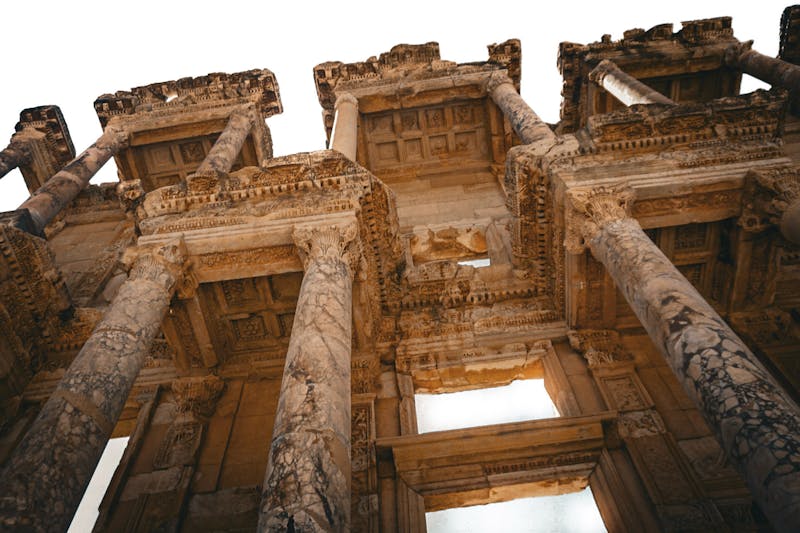
What was seen in a dream by a poor nun has now become a refuge for millions. The forgotten stones on a lonely mountain have become a harbor of peace and hope. For the Lord chooses the weak to shame the strong, and the small to become great in His kingdom. Come, then, to this house. Leave behind the marble streets of Ephesus and the great theater where the crowds once shouted. Climb the Mountain of the Nightingale, and in the silence of the small stone house, listen. You will hear, whispered on the wind, the prayers of the Mother of the Lord, the quiet suffering of a woman who watched her Son die, and the promise that those who mourn shall be comforted. And you will see a miracle: Christians and Muslims, strangers and friends, standing side by side, lighting candles, drinking from the same spring, and calling upon the name of Mary. For she is blessed among women, and blessed is the fruit of her womb, Jesus Christ, the Lord of all.
Last Modification : 8/31/2026 11:57:11 AM