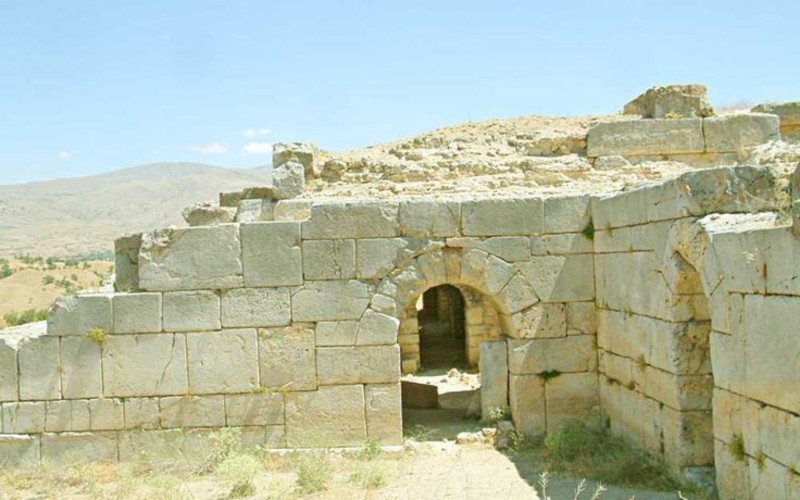
Paul's First Sermon in Antioch of Pisidia
Antioch of Pisidia holds a unique place in Christian history as the setting for the Apostle Paul's first recorded sermon. This pivotal moment, preserved in Acts 13:16-41, represents a watershed in the expansion of early Christianity. Here, in a synagogue of the Jewish diaspora, Paul delivered a message that would serve as a template for his missionary preaching and articulate the central themes of his theology. The sermon, given during Paul's first missionary journey, is not merely a historical curiosity but a profound exposition of how the story of Israel finds its culmination in Jesus Christ.
The Historical and Cultural Context
Pisidian Antioch was a significant city in the Roman province of Galatia, a center of Roman administration and culture often called the "New Rome". It was home to many Roman officials and featured typical imperial architecture, including temples dedicated to emperor worship. Into this environment of cultural and religious pluralism, Paul and Barnabas arrived around 47-48 AD, having traveled by sea and then on foot from the coastal region of Pamphylia.
The synagogue service followed a traditional pattern familiar to first-century Judaism. It began with the recitation of the Shema and prayers, followed by readings from the Law and the Prophets. The rulers of the synagogue, recognizing Paul and Barnabas as visiting teachers, extended to them the customary invitation to offer "a word of encouragement". This was the open door Paul had been seeking, a divinely orchestrated opportunity to proclaim his message.
The Structure and Content of the Sermon
Paul's sermon unfolds in three distinct movements, each building upon the last to create a compelling case for Jesus as the promised Messiah.
Part One: The Preparation of God (Acts 13:16-25)
Paul begins by establishing common ground with his audience, addressing them as "Men of Israel and you who fear God". His opening is a masterful retelling of Israel's history, designed to remind his hearers of God's faithful, sovereign work. He traces the narrative from God's choice of the patriarchs, through the Exodus and wilderness wanderings, to the conquest of Canaan and the period of the judges.
The critical pivot in this historical survey is the establishment of the monarchy, specifically the selection of David. The Lord's testimony about David—that he was "a man after my own heart, who will carry out all my will"—is not a moral endorsement but a statement of divine election, highlighting that God chose David and established a covenant with him. Paul emphasizes that from David's offspring, God had brought to Israel a Savior, Jesus, as He had promised. This is the crucial bridge: the entire history of Israel was preparation for the arrival of this one person. The historical review, then, is not merely recitation but theological groundwork, demonstrating that the gospel is the culmination of God's long-standing plan.
Part Two: The Rejection and Vindication of Jesus (Acts 13:26-37)
Having established the promise, Paul now shows its fulfillment. The center of the sermon is the narrative of Jesus, focusing not on His earthly life or teachings but on His death and resurrection. Paul argues that the inhabitants of Jerusalem, though ignorant of the prophets' words, fulfilled them in condemning Jesus to death. They took him down from the cross and laid him in a tomb. But the pivotal moment comes with the divine reversal: "But God raised him from the dead".
The resurrection is the crux of the message. Paul emphasizes its historicity by appealing to the eyewitness testimony of those who saw the risen Jesus over many days. The tone here is different from Peter's sermons in Jerusalem, where he directly accused his hearers of complicity in Jesus' death. Paul, speaking to Jews of the diaspora who likely had no personal involvement, is careful to distinguish "they that dwell in Jerusalem, and their rulers" from his audience, allowing them to make their own choice.
To prove that the resurrection was always the divine plan, Paul presents a chain of Old Testament prophecies. He quotes Psalm 2:7 ("You are my Son; today I have become your Father"), interpreting the "begetting" as a reference to the resurrection—Jesus' inauguration as the Davidic King. He then cites Isaiah 55:3 and Psalm 16:10 to show that the "holy and sure blessings of David" would be fulfilled in one who would not see decay. David, Paul argues, did experience corruption and death; therefore, he could not have been speaking of himself but of the Messiah whom God would raise and who would never see decay. This Scripture-laden argumentation demonstrates that the gospel is not a new religion but the fulfillment of Jewish hopes.
Part Three: The Application and Appeal (Acts 13:38-41)
The sermon reaches its climax with a direct, personal appeal. Paul declares: "Therefore, let it be known to you, brothers and sisters, that through this man forgiveness of sins is being proclaimed to you". This is followed by a crucial theological statement: "Everyone who believes is justified through him from everything that you could not be justified from through the law of Moses".
This declaration marks an early expression of Paul's theology of justification by faith. The law is impotent to bring about justification—a judicial declaration of righteousness and liberation from sin's penalty and power. Jesus, the resurrected King, accomplishes what the law could not. Some scholars note that the Greek phrasing here suggests the concept of "liberation" from enslaving powers. The call is clear: all who believe in Jesus are set free, a freedom the Law could never bestow.
The sermon concludes with a sobering warning. Citing Habakkuk 1:5, Paul cautions his hearers not to be among those who scoff at God's work, lest they face the judgment of those who reject His offer of salvation. The good news is thus accompanied by the stark reality of choice.
The Legacy and Significance
The sermon at Pisidian Antioch is more than just the first recorded sermon of Paul; it is an interpretive key to understanding his entire mission. It demonstrates that Paul did not preach an "anti-Jewish" message but rather remained a faithful Jew who believed he had found the fulfillment of the Jewish promises. His method of connecting Israel's story to its culmination in Jesus would become his standard approach in the synagogues.
This sermon also offers a window into the early Christian understanding of the Old Testament, showing how the early church read the Hebrew Scriptures as a unified narrative pointing to Christ. Most significantly, it articulates the core of Paul's gospel: salvation is found not in adherence to the Law but through faith in the risen Jesus, who offers forgiveness and justification to all who believe. The message, first proclaimed in the heart of the diaspora, would indeed become "a light for the Gentiles, to bring salvation to the ends of the earth".
Last Modification : 10/16/2026 3:18:02 AM