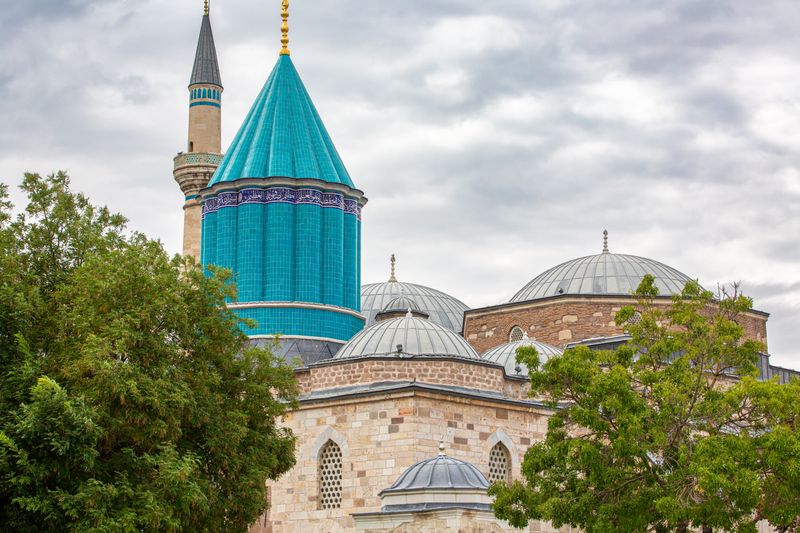
Iconium (Konya) in the Bible
: A Crossroads of Faith and Persecution
The ancient city of Iconium, known today as Konya in modern-day Turkey, holds a significant place in the biblical narrative of the early Christian church. Situated on the high central plateau of Asia Minor, Iconium was more than just a dot on the map of the Roman Empire; it was a vibrant, strategic crossroads of cultures and a pivotal stage for the missionary journeys of the Apostle Paul. Its mention in the Book of Acts provides a window into the challenges, triumphs, and fierce opposition that characterized the spread of early Christianity.
A City of History and Legend
Iconium's history stretches far back into antiquity, long before the arrival of Paul and Barnabas. According to the Bible Encyclopedia, its very name is likely of Phrygian origin, though a popular Greek myth was later crafted to give it a Hellenic meaning . This legend tells of a great flood and how Prometheus and Athena remade mankind from mud images, or eikons, thus giving the city its name . This blending of cultures—Phrygian, Greek, and later Roman—defined Iconium's character. Located on a major eastern trade route from Ephesus to the Euphrates, it was a prosperous city surrounded by fertile plains, blessed with water and a genial climate, which led scholar W.M. Ramsay to call it "the Damascus of Asia Minor" .
Paul and Barnabas in Iconium
The biblical account of Iconium is found primarily in Acts 14:1-7. Following their expulsion from Pisidian Antioch, Paul and Barnabas arrived in Iconium, a journey of some eighty miles, and as was their custom, went directly to the Jewish synagogue . Their message, however, was not just for the Jewish community. Acts 14:1 records that they spoke so effectively that "a great number of Jews and Greeks believed" . This immediate success highlights Iconium's mixed cultural and religious population, where Hellenistic "God-fearers" were already part of the synagogue community, making them receptive to the Gospel .
Yet, this success inevitably sparked fierce opposition. The "unbelieving Jews" who rejected the message actively stirred up the Gentiles, "poisoning their minds against the brothers" (Acts 14:2) . This created a deep division within the city, with some siding with the apostles and others with their opponents . Despite this growing hostility, Paul and Barnabas did not immediately flee. Acts 14:3 states they "stayed there for a considerable time, speaking boldly for the Lord, who confirmed the message of his grace by enabling them to perform signs and wonders" . This period of bold ministry, supported by miracles, demonstrates their perseverance and the power of the Holy Spirit working through them.
The tension, however, eventually reached a boiling point. A plot was hatched by both Gentiles and Jews, together with their rulers, to mistreat the apostles and stone them (Acts 14:5) . Learning of the plot, Paul and Barnabas fled to the Lycaonian cities of Lystra and Derbe . Their departure was not a retreat from the mission but a strategic move to continue spreading the Gospel in other regions .
Historical Corroboration and Legacy
What makes the biblical account of Iconium so compelling is the degree to which it aligns with known history and archaeological discoveries. The Bible Encyclopedia notes that while Lystra and Antioch were favored as Roman colonies, Iconium retained a predominantly Greek character and was somewhat resistant to Roman influence . The account in Acts reflects this: Luke never calls Iconium a Roman colony, an oversight that would be unlikely if the story were a later invention. Archaeological evidence confirms this; Iconium only received colonial status under the Emperor Hadrian in 135 A.D., long after the events described in Acts .
Furthermore, archaeological finds in the region provide a solid foundation for the biblical narrative. A funerary stele bearing a menorah and a theater seat inscribed as "the seat of the Jews at Iconium" confirm the presence of a significant Jewish community . Coins from the period, inscribed with Greek legends, and milestones from the Via Sebaste road network, corroborate the geographical and political context of Paul’s journey .
Iconium’s significance in early Christianity does not end in Acts 14. When Paul and Barnabas had finished their work in Derbe, they retraced their steps, returning to Iconium to strengthen the disciples and appoint elders in the newly formed church (Acts 14:21-23) . This act shows the deep pastoral concern the apostles had for the believers they had left behind. Years later, writing from a Roman prison to his young protégé Timothy, Paul remembered his past sufferings, listing "persecutions, afflictions, which came to me at Antioch, at Iconium, at Lystra" (2 Timothy 3:11), demonstrating that the memories of these trials remained with him for life .
The church in Iconium endured and its presence continued for centuries, as evidenced by numerous Christian inscriptions from the third century onward . The city's legacy, as an ancient Konya, continued into the Byzantine and later Seljuk periods. Even today, visitors can see remnants of this deep Christian history, such as the rock-carved Akmanastır Monastery, which holds traditions of visits by Saint Paul and the early saint Thecla . The ancient city of Kilistra, located near Konya, also shows evidence of early Christian settlements with its rock-cut churches and chapels .
Last Modification : 8/31/2026 12:42:40 PM