Ephesus
When people think of biblical lands, Israel naturally comes to mind. Yet Turkey—ancient Asia Minor—holds a staggering claim: more than two-thirds of the New Testament books were either written to or from this region . And at the heart of this story lies Ephesus, the most significant biblical city in Turkey and one of the most influential centers of early Christianity.
A City of Grandeur and Influence
Ephesus was no minor outpost. In the first century AD, it ranked as the second largest city in the Roman Empire, with a population exceeding 250,000 . As the capital of the Roman province of Asia, it served as a bustling commercial hub, a center of culture, and the beginning point of the main highway running from the Aegean coast into the Anatolian interior .
The city was renowned throughout the ancient world for the Temple of Artemis (or Diana), one of the Seven Wonders of the Ancient World . This magnificent sanctuary attracted pilgrims from across the Mediterranean, creating a thriving local economy selling silver shrines and idols—an industry that would later bring Paul into direct conflict with the city's silversmiths . The city's theatre, where the famous riot against Paul unfolded, could seat approximately 25,000 spectators .
Paul's Ministry in Ephesus
The Apostle Paul's connection to Ephesus is foundational to its biblical significance. On his third missionary journey, Paul arrived in Ephesus and remained for about three years—longer than in any other city . His ministry was remarkably effective: Acts 19:10 records that "all the residents of Asia, both Jews and Greeks, heard the word of the Lord" .
During this period, Paul taught daily in the lecture hall of Tyrannus and performed extraordinary miracles . The impact was profound. Many who had practiced sorcery publicly burned their scrolls—a dramatic turning from pagan practices valued at fifty thousand pieces of silver . This public renunciation of magic and idolatry demonstrated the gospel's transformative power in a city saturated with spiritualism and pagan worship.
The most dramatic event of Paul's Ephesian ministry was the riot instigated by Demetrius the silversmith. Fearing that Paul's preaching threatened the Artemis idol trade, Demetrius stirred up the city, and the mob rushed into the great theater shouting "Great is Artemis of the Ephesians!" . Paul wanted to address the crowd, but his disciples restrained him, knowing he would be torn apart . The city clerk eventually calmed the mob, and Paul departed soon after .
The Epistle to the Ephesians
Paul's letter to the Ephesian church stands as one of the most profound theological works in the New Testament . Written during his house arrest in Rome (c. AD 60-62), the epistle emphasizes themes that resonate powerfully with the city's context :
Unity in Christ: Paul stresses that both Jews and Gentiles are reconciled to God through Christ, forming one new humanity . This was a radical message in a city divided by ethnic and religious boundaries.
Spiritual Warfare: The famous "armor of God" passage (Ephesians 6:10-18) takes on special significance in Ephesus, where Paul had witnessed the open practice of magic and the power of Artemis worship .
The Mystery of the Gospel: Paul unveils the "mystery" that Gentiles are fellow heirs with Jewish believers—a truth that directly challenged the exclusivity of Ephesian pagan cults .
The Church in Revelation
By the time John wrote Revelation in the 90s AD, the Ephesian church had persevered through hardship. Christ commends them for their hard work, perseverance, and rejection of false apostles . Yet he also delivers a sobering rebuke: "You have forsaken your first love" (Revelation 2:4). The call to return to their initial devotion serves as a timeless warning that theological orthodoxy without heartfelt love is spiritually bankrupt .
A Center of Christian Tradition
Ephesus remained vital to Christianity long after the apostolic age. According to tradition, the Apostle John spent his final years in Ephesus, wrote his Gospel there, and was buried nearby . The emperor Justinian later built the magnificent Basilica of St. John over the traditional site of his tomb .
The city hosted the Third Ecumenical Council in 431 AD, which affirmed Mary as Theotokos (Mother of God) and condemned Nestorianism . This council solidified Ephesus's place in church history as a center of theological development.
Walking Where Paul Walked
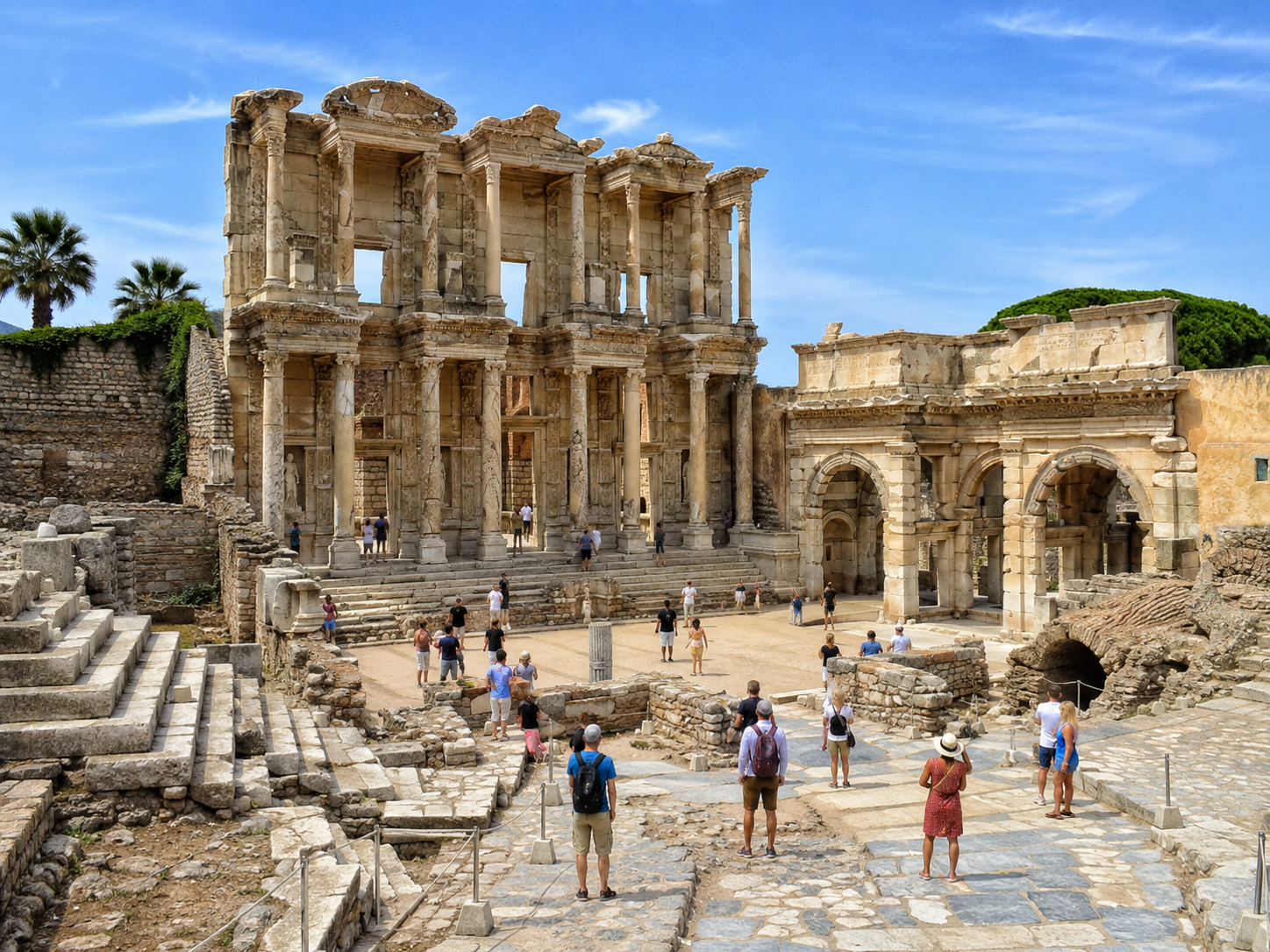
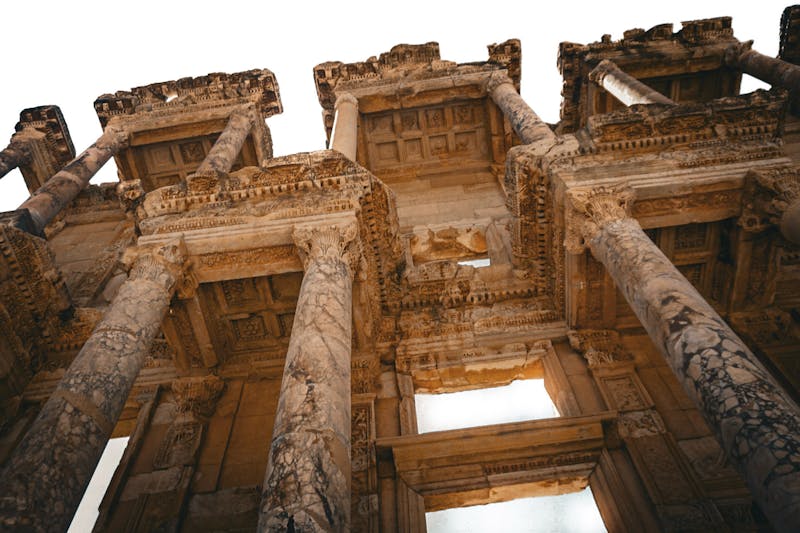
Today, the ruins of Ephesus remain remarkably preserved. Visitors can walk the same marble streets Paul traversed, stand in the great theater where the mob chanted Artemis's name, and gaze at the reconstructed facade of the Library of Celsus . The once-magnificent Temple of Artemis, however, has vanished—only a single column stands in a swampy field, a stark reminder of the transience of earthly glory .
As one pilgrim reflected while sitting in the theater where Paul faced a mob: "The challenge for me is to also do what Paul did: Courageously stand for Christ even under threat" .
Ephesus stands as perhaps the most important biblical city in Turkey not merely because of its archaeological remains, but because of the New Testament books written from or to it—Ephesians, 1 Timothy, 2 Timothy, Revelation, and possibly John's Gospel . Here, early Christianity confronted and overcame the dominant pagan culture of the Roman world. The message that Paul preached, the community he built, and the letters he wrote continue to speak with power nearly two millennia later.
Last Modification : 9/1/2026 1:53:00 PM