Mastering the Light
When one thinks of the events that changed the course of human history, the agricultural revolution, the invention of writing, or the industrial revolution usually come to mind. Yet, the foundation for all these revolutions—and perhaps the most critical transformation of all—is the control of fire. Fire represents not only the first major technological leap that separated humans from animals but also fundamentally altered everything from our biology and social structure to our dietary habits and our perception of the world. The science of archaeology traces the evidence of this ancient relationship through ashes, burnt bones, and heat-cracked flints. But how exactly did this process begin? When did humanity domesticate this terrifying and destructive force of nature?
First, it is necessary to distinguish between the "discovery" of fire and the "control" of fire. Natural fire—caused by lightning strikes, volcanic activity, or the spontaneous combustion of organic matter in extreme heat—existed long before humanity. The journey of early hominins from fearfully observing this natural fire, to feeding and carrying it, and finally to creating fire from scratch was a gradual process spanning hundreds of thousands of years.
The earliest and most controversial evidence for the controlled use of fire in archaeology comes from the Chesowanja (Kenya) and Koobi Fora regions of East Africa. In these areas, dating back approximately 1.5 to 1.8 million years, heat-altered, reddened flints have been found in hominin-occupied layers. However, there is no consensus in the scientific community on whether these finds resulted from hominin activity or a natural wildfire. The burnt bones and plant ash remains found in Wonderwerk Cave in South Africa, dating to around 1 million years ago, are more convincing. Found deep within the cave, where a natural fire could not reach, these remains indicate that Homo erectus used fire in a controlled manner.
The earliest undisputed archaeological evidence for the controlled use of fire comes from the Gesher Benot Ya'aqov site in Israel. At this site, dated to 790,000 years ago, burnt wood pieces, heat-cracked flints, and burnt seeds were found concentrated around a specific hearth. These findings demonstrate that fire was not merely used opportunistically but was deliberately maintained in constructed hearths—in other words, it was fully controlled.
The impact of this revolution is perhaps most evident in the human body. As Richard Wrangham convincingly argues in his book Catching Fire: How Cooking Made Us Human, the consumption of cooked food led to profound changes in the human digestive system. Cooking makes meat and plants easier to digest, allowing more calories to be obtained with less energy expenditure. Consequently, as the intestines shortened, the saved energy was redirected toward brain development. In short, our large, energy-demanding brains are largely indebted to fire and the culture of cooking.
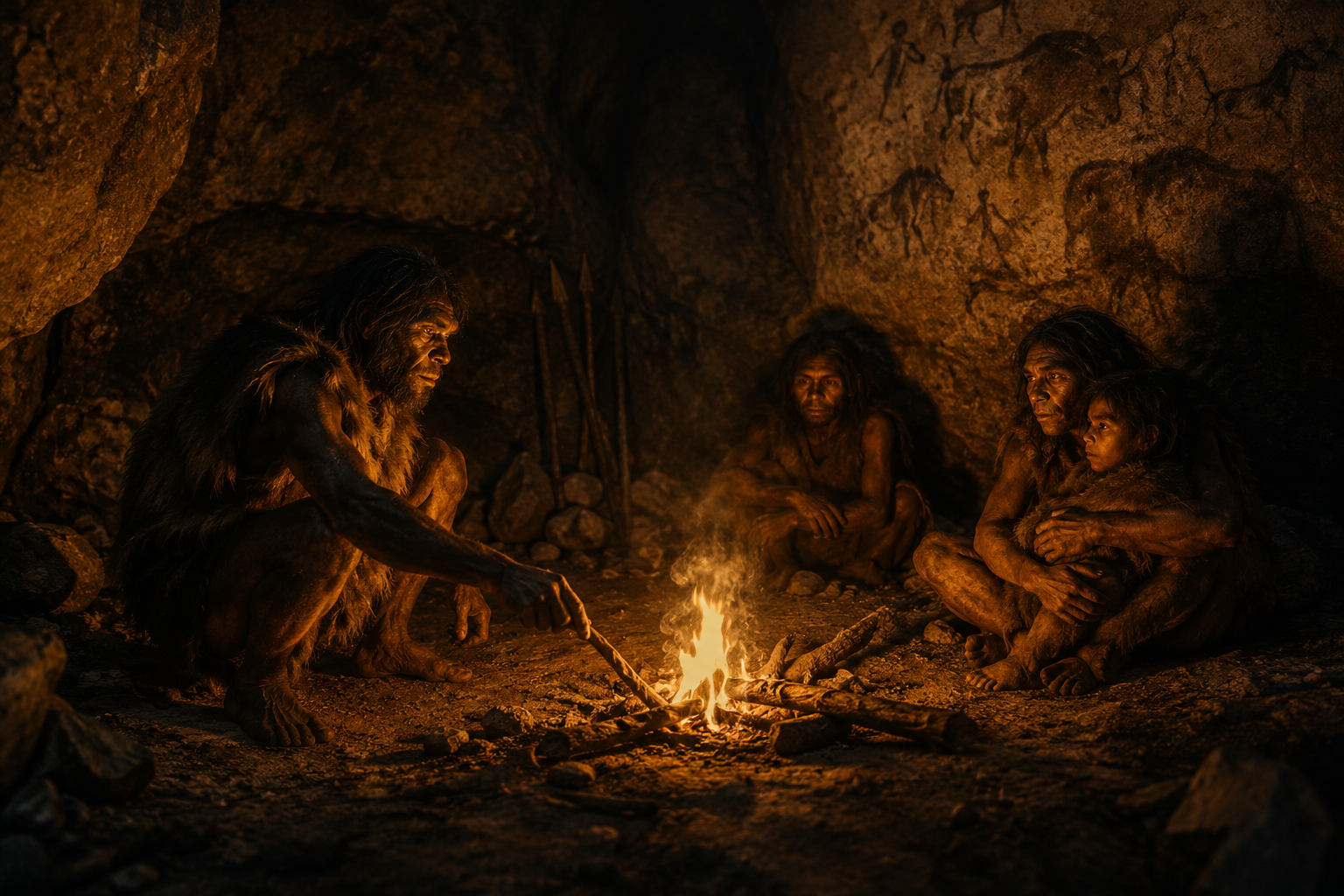
Fire's effects extended far beyond biology. By creating a warm, illuminated, and safe zone at night, fire protected humans from predators and extended the day. Social interaction, once limited to daylight hours, was extended into the night around the fire. These fireside conversations became the first venues for language development, storytelling, the birth of rituals, and cultural transmission. Furthermore, fire paved the way for technological innovations such as hardened wooden spears and the heat-treatment of flint tools.
Despite all this profound transformation, the ability to create fire appeared quite late. For a long time, humans had to keep fire constantly alive, carrying it from natural wildfires or neighboring groups. The earliest definitive fire-making tools (strike-a-lights using flint and pyrite to produce sparks) date to the Upper Paleolithic period, approximately 40-50 thousand years ago. This is a secondary revolution that occurred hundreds of thousands of years after fire was first controlled.
In conclusion, the discovery and control of fire is one of the longest and most influential processes in human history. Archaeology shows that this process did not happen all at once but consisted of a series of experimental steps spreading from Africa to Eurasia. This ancient partnership, which began with Homo erectus, transformed into a geological force shaping the planet with Homo sapiens. Fire is the first and most fundamental human technology that brought together shelter, factory, laboratory, and cathedral in one. Striking a match or warming oneself by a hearth today means keeping alive the fire of this great human adventure that has lasted hundreds of thousands of years.
Last Modification : 8/31/2026 11:02:08 AM