Vatan Avenue
Located in the heart of Istanbul, Vatan Avenue is one of the city’s widest and most iconic boulevards. Officially named Adnan Menderes Boulevard, it was constructed in the 1950s as part of urban development projects initiated by then-Prime Minister Adnan Menderes. At the time, locals questioned the need for such a wide road, humorously asking, “Are you planning to land airplanes here?” Yet over time, the avenue became a central hub for government and protocol, hosting major public institutions such as the Istanbul Governor’s Office, Police
Headquarters, and the Ministry of Finance.
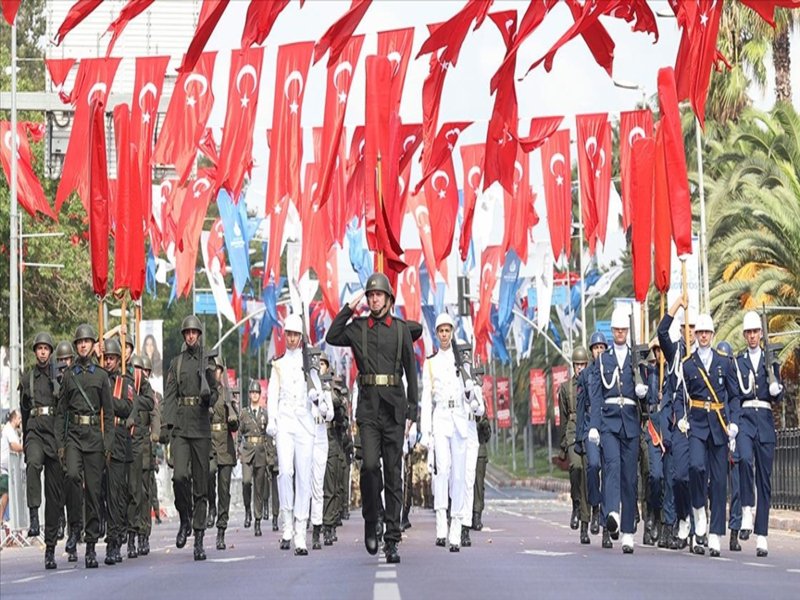
National celebrations and military parades are held along Vatan Avenue, drawing large crowds. The procession of Turkish Armed Forces vehicles is a highlight, and the low-altitude flyovers of F-16 fighter jets offer a thrilling and thunderous spectacle.
But this modern boulevard once looked very different. During the Roman era, the Lykos River flowed through this area. On its banks, in the 10th century, the Byzantine admiral Constantine Lips commissioned a church. In 1261, a second church was added to the complex, and in 1496, during the Ottoman period, the structure was converted into a mosque known as Fenari Isa Mosque.
Adjacent to Vatan Avenue lies Fevzi Pasha Boulevard, named after Marshal Fevzi Çakmak, the first Chief of General Staff of the Republic. Along this boulevard stands the Fatih Mosque, built by Sultan Mehmed the Conqueror after the conquest of Constantinople. The hill on which the mosque stands was once home to the Church of the Holy Apostles during the Byzantine era. Emperor Constantine the Great wished to be buried there alongside the relics of Jesus’s apostles, but he passed away before collecting them all. The church later became the burial site for Byzantine emperors. Sultan Mehmed, who saw himself as the new emperor of Rome, chose this site for his own tomb, as well as that of his wife, Gülbahar Hatun.
A short walk from Fatih Mosque leads to a neighborhood known locally as Kıztaşı (“Maiden’s Stone”). At its center stands the Column of Marcian, erected in 455 AD in honor of Roman Emperor Marcian. Made of reddish-grey Egyptian granite, the column’s base features reliefs of Nike, the goddess of victory. Locals likened the figure to a young girl, hence the name “Maiden’s Stone.” This monument is a rare blend of Byzantine grandeur and popular imagination.
The streets surrounding Kıztaşı are filled with quiet traces of Istanbul’s layered past. Local restaurants offer traditional dishes such as paça soup (made from lamb’s feet), turning a simple meal into a journey through time and taste.
While exploring the historic atmosphere of Kıztaşı, your senses are treated to more than just visual splendor. At the heart of the neighborhood stands the beloved Kıztaşı Muhallebicisi, a dessert shop that has been serving the community for over 30 years. Renowned for its traditional milk-based sweets—especially mastic-flavored muhallebi, kazandibi, and tavuk göğsü—this shop uses fresh buffalo milk sourced early each morning from the village of Zekeriya. Even culinary experts like Vedat Milor have praised its authenticity and flavor.
Before leaving Kıztaşı, stopping by this patisserie for a bowl of muhallebi is a must. The rich texture, the delicate balance of milk and mastic, and the nostalgic presentation transport you not only through taste but through the many layers of Istanbul’s cultural heritage.
Last Modification : 10/17/2026 4:38:22 AM