Bosphorus
The Istanbul Strait (İstanbul Boğazı)
The Istanbul Strait, also known as the Bosphorus, is one of the world's most important and beautiful waterways. The origin of its name comes from a Greek word meaning "ox ford", which is also the source of the name "Bosphorus" used worldwide. This name is based on a mythological story featuring Zeus: According to legend, Zeus, king of the gods, transformed the priestess Io, whom he loved, into a heifer (an ox/cow) to protect her from his jealous wife, Hera. While fleeing from a gadfly sent by Hera in this form, Io swam across this narrow waterway, giving the Strait its name from this mythological event. It spreads the city of Istanbul across two continents, separating Asia from Europe, and connects the Black Sea to the Sea of Marmara (and thus to the Mediterranean).
Key Features:
- Geographical and Strategic Location:
- It is approximately 30 km long, with its narrowest point being only 698 meters wide between Anadolu Hisarı and Rumeli Hisarı.
- Its geographical structure is winding, much like the sinuous body of a snake. These sharp turns (bends) and strong currents pose a serious navigation challenge, especially for large-tonnage oil tankers and cargo ships. Ships wanting to pass to or from the Black Sea must perform frequent and precise maneuvers. Unfortunately, these difficult conditions can sometimes lead to unwanted maritime accidents, as has happened in the past.
- It is an international waterway open to maritime traffic. It is regulated by the Montreux Convention (1936) and is under Turkey's control.
- It holds great importance both militarily and commercially (especially for oil transportation).
- Historical and Cultural Heritage:
- It has been home to civilizations for thousands of years. It was the heart of ancient Byzantion, Constantinople, and the Ottoman Empire.
- Its shores are lined with historical palaces (Topkapı, Dolmabahçe, Beylerbeyi), fortresses, and mosques.
- Natural Beauty:
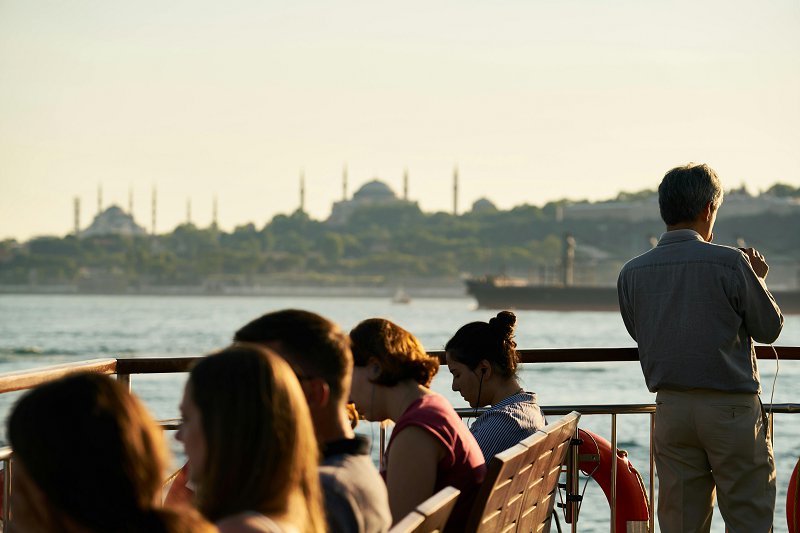
- It possesses a unique landscape. It is particularly enchanting at sunset or when the lights come on at night. One of the most unforgettable spots to experience this view is Salacak Coast in Üsküdar on the Asian side. From here, you can witness Istanbul's most iconic postcard view: the silhouette of Topkapı Palace, Hagia Sophia, and the Sultanahmet Mosque bathed in the golden and crimson light of the setting sun, with the Maiden's Tower (Kız Kulesi) in the foreground.
- Taking a Bosphorus tour is an essential part of the Istanbul experience. This tour can be done by public ferry, private boat, or tourist ferry.
Social and Urban Fabric:
Istanbul's unique construction and social fabric are clearly reflected along the shores of the Bosphorus. The strait is divided into distinct zones along its length:
- From the Marmara Entrance to the First Bridge (15 July Martyrs Bridge): This area is the heart of Istanbul's commerce, finance, and daily life. Business and transportation hubs like Eminönü, Karaköy, Beşiktaş, and Kabataş are located here.
- From the First Bridge to the Second Bridge (Fatih Sultan Mehmet Bridge): This is the most prestigious and luxurious part of the Bosphorus. Boutique cafes and restaurants in neighborhoods like Bebek, Arnavutköy, and Yeniköy are popular weekend getaway spots. At the same time, areas like Ortaköy and Kuruçeşme stand out as the heart of Istanbul's nightlife and vibrant entertainment venues.
- From the Second Bridge Northwards (towards the Black Sea): Moving away from intense city life, this region takes on a calmer and more natural character. Forested areas, fishing villages (Rumeli Kavağı, Anadolu Kavağı), and the consulate residences or summer palaces of many countries are located in this peaceful zone.
The Icon of the Bosphorus: The Yalıs and Their Mysterious World
An indispensable element of the Bosphorus skyline are the yalıs (waterside mansions) lining its shores. These structures are not only architectural works but also symbols of social status and immense economic value.
- Number and Value: There are approximately 600 yalıs along the Istanbul Bosphorus, about 360 of which are protected historical yalıs. As Turkey's most expensive real estate, the value of these yalıs can reach tens, even hundreds of millions of dollars.
- Popular Culture and Tourism: In recent years, with the global spread of the Turkish television series industry, Bosphorus yalıs have gained worldwide fame. Many series are filmed in these magnificent mansions, turning them into globally recognized icons. This has multiplied tourists' interest in these yalıs.
- The Most Frequently Asked Question and a Proverb: One of the most common questions tourists ask during a Bosphorus tour is, "Who owns these yalıs?" Due to privacy laws, it is not possible to give clear answers to this question. However, an answer from Turkish culture can shed light on this question full of curiosity and speculation: "Too much talk is not without lies, too much property is not without unlawful gain." This proverb summarizes society's age-old suspicion and reflective perspective regarding the source of great fortunes.
The Winged Residents of the Bosphorus: The Seagulls
The Bosphorus is not only associated with structures but also with its white and grey, noisy residents: the seagulls. These birds are an inseparable part of Bosphorus culture.
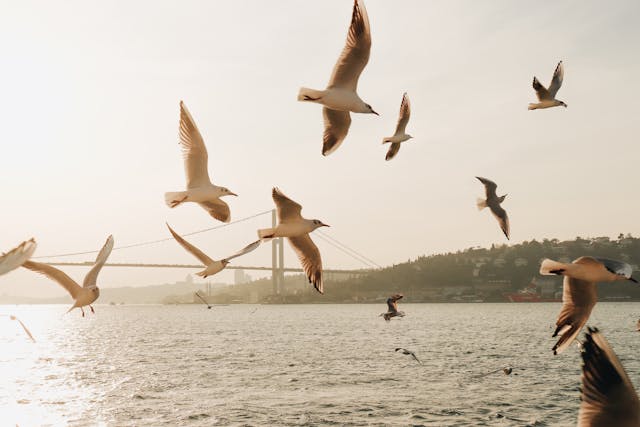
- A Tradition: Feeding the Seagulls: It is a deep-rooted tradition for Istanbulites to throw pieces of simit (Turkish bagel) or crackers to the seagulls during their ferry journeys between the two continents. The seagulls are masters at gliding behind the ferry and catching these treats in mid-air.
- Well-Fed and Majestic: As a result of this constant and nutritious feeding, Bosphorus seagulls have a body size that is nearly twice as large and majestic compared to the world average. They are like the proud and well-fed guardians of the Bosphorus.
- The City's Color: The colors of Istanbul's maritime public transport vehicles (ferries, sea buses) are no coincidence. These vehicles are painted with yellow-orange stripes on a white hull, which is precisely the color palette of a seagull from its beak to its tail. The city has even painted its transportation in the colors of this winged symbol.
Daily Life and Transportation:
- Transportation between Istanbul's two sides is provided by three suspension bridges (15 July Martyrs Bridge, Fatih Sultan Mehmet Bridge, Yavuz Sultan Selim Bridge), the Marmaray railway tunnel, and Metro lines.
- Thousands of people cross from one side to the other by ferry every day; this journey is part of the daily routine for Istanbulites. It is precisely on these journeys that the tradition of feeding seagulls with simit is kept alive in its most vivid scenes.
Tips for Experiencing the Bosphorus:
- Take a Ferry Tour & Feed the Seagulls: Take a full tour on a public ferry (İDO) from Eminönü or Beşiktaş. Don't forget to bring a simit with you! During the journey, become part of the tradition by throwing simit pieces to the seagulls and marvel at their agile maneuvers.
- Have a Coffee Break in Ortaköy or Arnavutköy: Sit in a cafe by the shore and watch the bridge view and the seagulls in flight.
- Eat Fish by the Bosphorus: Restaurants by the shore, especially in Rumeli Hisarı or Bebek, are famous. While eating, you can also offer treats to the seagulls.
- Walk Along the Coast: You can walk from Beşiktaş to Ortaköy or from Bebek to Arnavutköy to take great photos and observe the giant seagulls on the shore.
- Observe the Yalıs and Palaces: Watch the Dolmabahçe Palace, Çırağan Palace, and the rows of magnificent yalıs as you pass by on the ferry.
- 🎯 Salacak Coast at Sunset: I strongly recommend going to Salacak Coast in Üsküdar at sunset and sitting by the water. From this point, you can see Istanbul's most magnificent and iconic silhouette right in front of you.
- Explore the Northern Fishing Villages: Escape the city crowds by going to Rumeli Kavağı or Anadolu Kavağı to eat fresh fish and breathe in the calm seaside air. The Istanbul Bosphorus is not just a waterway; it is the heart, identity, and soul of the city. It is a unique center of attraction unlike any other in the world, where mythology, history, nature, wealth, popular culture, tradition, and daily life intertwine—from its mythological roots to the mysterious world of luxurious yalıs, from the free flight of winged seagulls to quiet fishing villages. At the same time, with its snake-like winding structure, it is a challenging and demanding passage for international maritime navigation.
Last Modification : 9/1/2026 2:41:42 PM