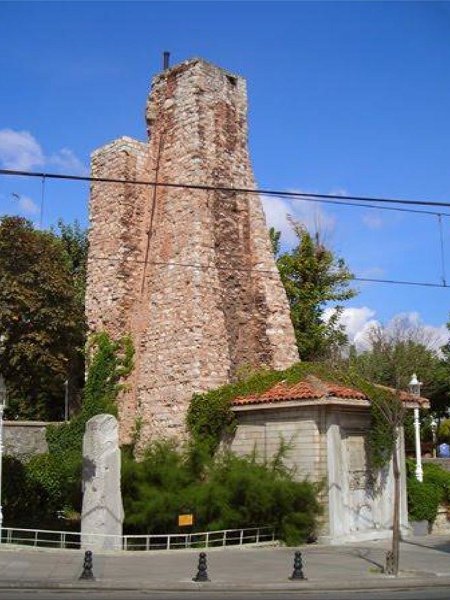
The Milion Stone: Istanbul’s Forgotten Landmark
Tucked away near the Hagia Sophia and the Hippodrome, the Milion Stone is one of Istanbul’s most overlooked yet historically significant relics from the Byzantine era. Though now just a modest ruin, this stone once marked the starting point of all roads in the Byzantine Empire—the "zero mile" of Constantinople.
A Symbol of Imperial Power
Built in the 4th century under Emperor Constantine the Great, the Milion Stone was modeled after Rome’s Miliarium Aureum, the golden milestone from which distances across the empire were measured. It stood as a grand triumphal arch, adorned with statues of emperors and Christian symbols, emphasizing Constantinople’s status as the New Rome.
Lost in Time
After the Ottoman conquest, the monument faded into obscurity. Its remnants were later buried under Ottoman infrastructure, including a water reservoir, leaving only a few weathered blocks visible today. Unlike the grand Hippodrome or the Blue Mosque nearby, the Milion Stone attracts little attention, yet it holds a quiet significance as the heart of ancient Constantinople’s road network.
Rediscovering the Past
Recent archaeological interest has shed new light on this forgotten landmark. For history enthusiasts, visiting the Milion Stone offers a tangible connection to the city’s Byzantine roots—a place where emperors once passed and travelers began their journeys across the empire.
Though small in size, its legacy is monumental. Next time you walk through Sultanahmet, pause for a moment at this humble stone—it’s where the Byzantine world began.