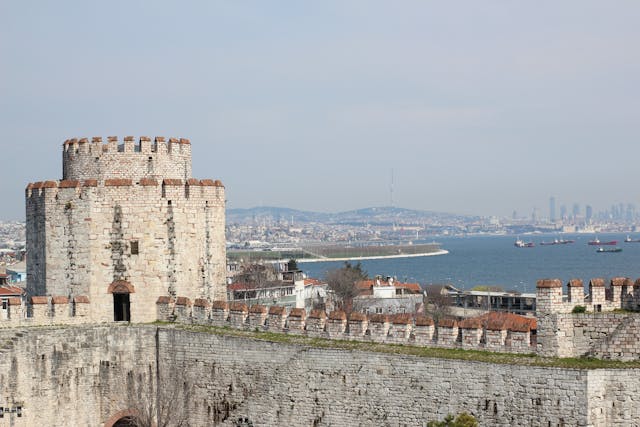
A Konstantinápolyi falak (ma Isztambul) a világ egyik leglenyűgözőbb ősi erődítményei közé tartoznak. A Bizánci Birodalom fővárosának védelmére épített, ezek a hatalmas kőfalak több mint 1000 éven át állták az ostromokat. Ma is Isztambul egyik legérdekesebb történelmi helyszíne.
Ebben az útmutatóban felfedezzük:
✔ A Konstantinápolyi falak történetét
✔ Hogyan építették és miért voltak ilyen erősek
✔ Hol láthatók ma a legjobb állapotban megmaradt szakaszok
✔ Tippek a falak meglátogatásához Isztambulban
1. Miért építették a Konstantinápolyi falakat?
Konstantinápoly (a mai Isztambul) a Keletrómai (Bizánci) Birodalom fővárosa és a világ egyik legfontosabb városa volt. Földrajzi fekvése Európa és Ázsia között kiemelt célponttá tette a betörők számára.
A támadások elleni védekezésül hatalmas falakat építettek:
Első falak (Kr.u. 4. század): Nagy Konstantin építtette, amikor Bizáncot tette meg a Római Birodalom új fővárosává.
Theodosius-falak (Kr.u. 5. század): II. Theodosius császár alatt bővítették ki, megalkotva a híres háromrétegű védelmi rendszert.
Tengeri falak: A várost védték a tengeri támadásoktól a Márvány-tenger és az Arany-szarv mentén.
2. A Theodosius-falak lenyűgöző tervezése
A Theodosius-falak koruk legfejlettebb erődítményei voltak. A Márvány-tengertől az Arany-szarvig 6,5 km-es hosszúságban húzódtak, és a következőket foglalták magukban:
A. A háromrétegű védelmi rendszer
Külső árok – Egy 20 méter széles, vízzel teli árok a támadók lelassítására.
Külső fal (Proteichisma) – Alacsony gát az ellenséges rohamok feltartóztatására.
Főfal – 12 méter magas, 96 hatalmas toronnyal az íjászok és a tüzérség számára.
Belső fal – Az utolsó védelmi vonal, 15 méter magas, majdnem lehetetlen megmászni.
B. Miért voltak ezek a falak ilyen nehezen bevehetők?
✔ A réteges védelem arra kényszerítette a támadókat, hogy több akadályon is áttörjenek.
✔ A tornyok lehetővé tették a védők számára, hogy nyilakat lőjenek, forró olajat öntsenek és görög tüzet (Greek fire) vetítsenek.
✔ A vastag kőépítmény ellenállt a faltörő kosoknak és a korai ágyúknak.
3. Az egyetlen két alkalom, amikor a falakat áttörték
Több tucat ostrom ellenére a falakat a történelemben csak kétszer foglalták el:
A. A Negyedik keresztes hadjárat (1204)
A keresztesek az Arany-szarv közelében lévő gyengébb tengeri falak felől támadtak.
Kifosztották a várost, ami a Bizánci Birodalom ideiglenes bukásához vezetett.
B. Az Oszmán hódítás (1453)
Hódító Mehmedóriási ágyúkat használt a falak bombázására.
Az oszmánok Topkapı közelében törtek be, megpecsételve Bizánc végzetét.
4. Hol láthatók ma a Konstantinápolyi falak
A falak számos szakasza ma is áll Isztambulban. Íme a legjobb helyek a meglátogatásra:
A. A legjobban megőrződött szárazföldi falak
📍 Yedikule erőd (Hét Torony) – Egy erődhöz hasonló, hatalmas szakasz.
📍 Topkapı és Edirnekapı között – Sétáljon a falak legépebben maradt részén.
📍 Belgradkapı – Eredeti kapukat és tornyokat mutat be.
B. A tengeri falak maradványai
🌊 A Márvány-tengeri falak – Töredékek Yedikule közelében.
🌊 Arany-szarv menti falak – Csak a Baba Cafer-torony maradt fenn Eminönüben.
C. Közeli történelmi látnivalók
✔ Khariye-mecset (Kariye Múzeum) – Elbűvölő bizánci mozaikok.
✔ Valens-vízvezeték – Ókori római vízellátó rendszer.
✔ Porphyrogenitus-palota – 13. század végi bizánci palota.
5. Tippek a Konstantinápolyi falak meglátogatásához
🚶 A legjobb felfedezési mód: Sétáljon a Theodosius-falak mentén Yedikule-től Edirnekapı-ig.
📸 Legjobb fotós helyszín: A Topkapı közelében lévő tornyok remek kilátást nyújtanak.
⏳ Szükséges idő: Tervezzen 1-2 órát a falak menti sétára.
🎟 Belépődíjak: Egyes részek ingyenesek, míg a Yedikule erőd ellenértékkel jár.
Miért érdemes meglátogatni a Konstantinápolyi falakat?
A Konstantinápolyi falak többek, mint pusztán romok – ősi katonai zsenialitás tanúi. Mellettük sétálva szinte hallani lehet a történelmet formáló csaták visszhangját.
Tervezze meg látogatását:
🕒 Legjobb időzítés: Reggel korán vagy késő délután a hűvösebb időjárás miatt.
Hasznosnak találta ezt az útmutatót? Ossza meg más történelemrajongókkal!