The Hippodrome : Where Empires Raced and History Was Made
**: **
In the heart of Istanbul, where the echoes of chariot wheels and roaring crowds once filled the air, lies the Hippodrome of Constantinople—a monument to the grandeur, power, and drama of empires. Today known as Sultanahmet Square, this ancient arena was more than just a racetrack; it was the beating heart of Byzantine life, a stage for imperial glory, rebellion, and the clash of civilizations.
A Stage for Emperors and Revolutions
Built by Septimius Severus in the 2nd century and transformed into a colossal spectacle by Constantine the Great, the Hippodrome mirrored Rome’s Circus Maximus but soon surpassed it in political significance. Here, the fate of empires was decided not just in races but in riots. The infamous Nika Revolt of 532 AD saw 30,000 rebels slaughtered by Emperor Justinian’s troops, turning the sands of the Hippodrome red with blood. The factions—Blues and Greens—were more than sports fans; they were political powerhouses capable of toppling rulers.
Monuments That Defy Time
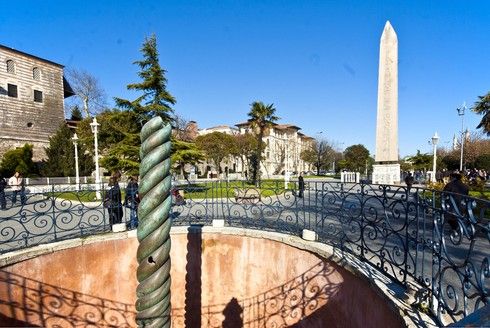
Though the Hippodrome itself has faded, its legacy stands tall in stone and bronze. The Obelisk of Theodosius, a 3,500-year-old Egyptian relic, gleams under the Istanbul sun, its hieroglyphs whispering of pharaohs long gone. Nearby, the twisted Serpent Column, forged from the shields of vanquished Persians, still bears the marks of ancient Greek victory. The Walled Obelisk, stripped of its gilded glory by Crusader greed, stands as a testament to the city’s turbulent past. And though the original bronze horses now watch over Venice, their replicas remind visitors of the Hippodrome’s stolen splendor.
From Byzantium to the Ottomans
When Mehmed the Conqueror took Constantinople in 1453, the Hippodrome became At Meydanı—the Square of Horses. No longer a racing arena, it witnessed Ottoman triumphs, executions, and Janissary uprisings. Stones from its ruins built the Süleymaniye Mosque, and the Blue Mosque rose where once the crowds cheered. Yet fragments remain: hidden vaults beneath the Turkish and Islamic Arts Museum, the curve of the Sphendone—ghosts of a vanished colossus.
Walking Through History Today
Now an open-air museum, Sultanahmet Square pulses with the energy of millennia. Visitors stand where emperors and sultans once ruled, surrounded by the majesty of Hagia Sophia, the opulence of Topkapı Palace, and the mystery of the Basilica Cistern. The Hippodrome’s stones have seen triumphs and tragedies, yet they endure—silent witnesses to the unbroken thread of history.
To walk here is to step into the arena of the past, where chariots raced, empires fell, and history was written in blood and glory. The Hippodrome is not just a relic—it is Istanbul’s eternal stage.
Visit, stand in the footsteps of giants, and let the past speak to you.
Last Modification : 10/18/2026 5:36:26 AM