The Church of St. Mary of the Mongols
In the historic peninsula of Istanbul, hidden within the bustling and dynamic life of the city like a concealed treasure, lies The Church of St. Mary of the Mongols (Panagia Muhliotissa), one of the city's oldest and most important religious structures. Noteworthy for its name as much as its history, this church has witnessed the final era of the Byzantine Empire, the ancient traditions of Orthodox Christianity, and the atmosphere of tolerance after the Conquest of Istanbul. Furthermore, it is a cultural heritage site that has survived through the power of a promise and a decree.
A Bridge of History: From Byzantium to the Present
The origins of the church trace back to the Palaiologos Dynasty, one of the most powerful dynasties of the Byzantine Empire. Maria Palaiologina, the illegitimate daughter of Emperor Michael VIII Palaiologos, was sent to become the wife of the Mongol Ilkhanate ruler Hulagu Khan for a political marriage. Although she was widowed soon after, Maria was respected in the Mongol court and worked to spread the Orthodox faith in those lands. Upon her return to Istanbul, she built a monastery on the site where the current church stands. The name "Muhliotissa" (of the Mongols) derives from this historical connection.
The church was rebuilt by Emperor Andronikos II in 1282. After the Conquest of Istanbul, the fate of the church was changed by a promise from Sultan Mehmed the Conqueror. According to tradition, Mehmed the Conqueror worked with a Rum (Greek) architect named Atik Sinan (Christodoulos) to build the Fatih Mosque, a symbol of the city. After the mosque was magnificently completed, Mehmed asked the architect if he had any wish. The architect replied, "My Sultan, there is a church that I built. I request that it be protected and remain open for worship." Mehmed the Conqueror granted this wish, gave his word that the church would be protected, and issued an edict (firman) decreeing that The Church of St. Mary of the Mongols should never be converted into a mosque and must always remain a church.
This situation makes it one of the rare Byzantine churches that was not converted into a mosque after the conquest and continued its original function. Even more importantly, it is the only religious structure in Istanbul that has been continuously active as a church since the Byzantine era. This continuity has allowed the building's structural integrity and interior decoration to be largely preserved.
Architectural and Artistic Features
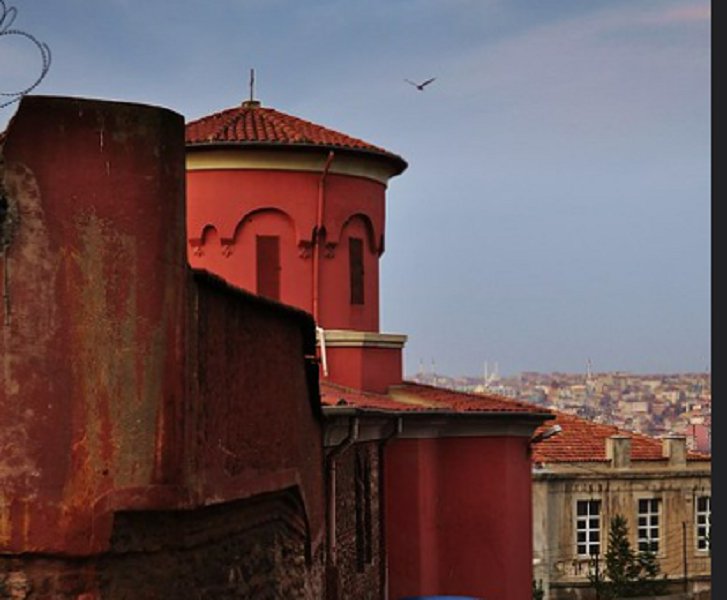
The Church of St. Mary of the Mongols is a typical example of late Byzantine church architecture. Its exterior facade is simple and modest, making it a structure difficult to notice in the back streets of Istanbul. However, the interior reflects the elegance of Byzantine art.
- Cross-in-Square Plan: The church was built on a Greek cross plan. A central dome covers the four arms.
- Decoration: The mosaics and frescoes inside carry the characteristics of the Palaiologan Renaissance of the late 13th and early 14th centuries. This period is known as a time of revival and dynamism in Byzantine art. The mosaic of the "Virgin and Child" in the apse and the depiction of "Christ Pantocrator" in the dome are particularly noteworthy. The frescoes adorning the walls depict scenes from the Bible and images of saints.
- Mehmed the Conqueror's Firman: Visitors to the church can see tangible proof of this historical story. The original edict (firman) of Mehmed the Conqueror is displayed, framed and protected, on the church's wall. This document is not only proof of the church's status but also a striking symbol of the Ottoman Empire's tolerance towards different faiths.
According to a legend detailed in Evliya Çelebi's "Seyahatname," the church's survival is linked to a dramatic story involving the architect of the Fatih Mosque. The tale recounts that Sultan Mehmed the Conqueror ordered the hands of his Greek architect, Atik Sinan, to be cut off after being displeased with the mosque's size. The maimed architect then sued the Sultan.
The case was heard by the judge Hızır Bey, who, in a legendary demonstration of Ottoman justice, ruled in the architect's favor. As compensation for the injustice, Atik Sinan was offered a reward. He asked that the church he had built—The Church of St. Mary of the Mongols—be granted to him and protected in perpetuity. The Sultan agreed and issued a firman, thus saving the church from ever being converted into a mosque.
- Atmosphere: The interior of the church has a calm, peaceful, and deeply religious atmosphere. Centuries of prayers, faith, and this protective edict seem to be etched into its very stones.
Why the "Church of the Mongols"?
The church's intriguing name stems from its founder Maria Palaiologina's connection to the Mongol court. The name "Muhliotissa" means "of the Mongols" in Greek and was given to the church because Maria was referred to as the "Mongol Princess." This name distinguishes it from many other churches dedicated to the Virgin Mary and makes it a tangible symbol of intercultural interaction in Istanbul.
Its Significance Today
The Church of St. Mary of the Mongols is still an active Rum Orthodox church open for worship today. Located in the Fener district of Istanbul, close to the Patriarchate, it holds great spiritual value for the local Rum community.
At the same time, it is an important visiting point for researchers, academics, and tourists interested in Byzantine history, art history, and the history of religions. Being one of the few surviving Byzantine structures, preserving its artwork in its original state, and housing that unique edict on its wall, make it indispensable for anyone seeking to understand the historical fabric of Istanbul.
The Church of St. Mary of the Mongols is not just a place of worship but also a living history book. It tells a story stretching from the last lights of Byzantium and the adventures of an emperor's daughter in the Mongol steppes, to the power of a Conqueror's promise and his tolerance, and on to the cosmopolitan spirit of modern-day Istanbul. While lost in the crowded streets of Istanbul, it quietly invites visitors on a short journey into the city's layered past, where they can see the original edict of Mehmed the Conqueror themselves.
Last Modification : 10/17/2026 4:39:52 AM