Şerifler Mansion
A Waterside Mansion or Just a "Shore House"?
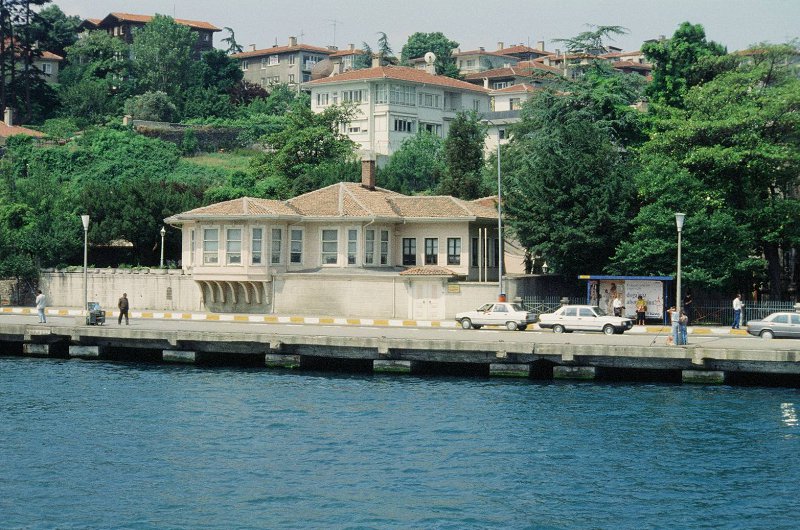
Among the magnificent yalis of the Bosphorus, there is one structure for which the term "yali" isn't entirely accurate. Because the coastal road that passes in front of it has severed its connection with the sea. For this reason, it would be more fitting to call Şerifler Yalısı a "sahilhane" (shore house). Much like most yalis on the European shoreline, with the exception of Yeniköy.
Standing modestly yet fascinatingly on the Emirgan coast, this structure is one of the oldest and most special mansions on the Bosphorus, having survived for centuries.
A Journey Through History
The first known owner was Emirgünoğlu Yusuf Paşa. However, the true story of this yali begins during the reign of Murad IV. The Sultan gifted this shore house, along with the grove behind it, to Emir Güne Han. After Murad IV's death, the Grand Vizier of Sultan İbrahim, Kemankeş Kara Mustafa Paşa, became the new owner.
In the first half of the 17th century, the building served as the "Divanhane" (reception hall) of Yusuf Paşa's Palace. It was later transformed into an independent yali by Feyzizade Mehmed Bey, the Head Clerk of the Imperial Treasury. During the reign of Mahmud II, the yali passed to Ağa Hüseyin Paşa. At the beginning of the 19th century, it was purchased by Abdülilah Paşa, the Sharif of Mecca. From that day on, it became known as Şerifler Yalısı (The Sharifs' Mansion).
An Architectural Masterpiece: The Touch of Ignace Melling
The yali was designed by the renowned architect of the period, Ignace Melling, in the Baroque style. It holds the distinction of being the oldest surviving yali on the European shores of the Bosphorus. Sadly, it has not survived to the present day in its original complete form.
The harem (private quarters) was ruthlessly demolished in 1946 to make way for the coastal road. Yet, this harem building was approximately three times larger than the selamlık (men's quarters) that remains standing today. Only the selamlık section has survived.
The Magic of the Interior
The interior of Şerifler Yalısı stands in stark contrast to its plain white facade, resembling a palace:
- The Fountain Room: At the center of this room lies a massive marble pool with a fountain. The ceiling decorations are magnificent, set against a stunning red background. Once hanging from the center of this ceiling was a Venetian chandelier, identical in model to those in Dolmabahçe and Beylerbeyi Palaces. Today, its whereabouts are unknown. Similarly, the crystal candlestick that once stood next to the marble fountain is also lost.
- The Fan-Vaulted Bay Window: The bay window that reaches out toward the sea is supported by seven fan vaults. This is an exceptionally rare detail in Bosphorus architecture.
- The Hidden Door: Perhaps the most intriguing feature of the yali is the door of the marble-floored salon facing the sea. The interior side of the door is designed to look like an ornate cupboard. When closed, you would see what appears to be a wall with two cupboards and a fireplace in the middle. This clever and artistic design is likely the most original part of the entire mansion.
- Timber and Lath Construction: The walls are adorned with exquisite motifs and gold illuminations.
Unforgettable Guests
Şerifler Yalısı is not only significant for its architecture but also for the distinguished guests it has hosted:
- Milos, the Despot of Serbia, was hosted here as a guest of Ağa Hüseyin Paşa during his visit to Istanbul.
- Yusuf Kamil Paşa and his wife Zeynep Kamil stayed in this yali when they came to Istanbul.
- Grand Vizier Midhat Paşa spent a summer vacation here in 1876 as a tenant.
The Threat of Destruction and Its Rescue
At one time, during the construction of the coastal road, there were even demands from ignorant parties to demolish this unique yali. Yet, this pristine white, single-story structure, with its modest exterior, was the pearl of Emirgan, leaving visitors in awe of its palace-like interior decorations.
Fortunately, it was not demolished. In 1967, the property passed to the Treasury, and in 1972, to the Ministry of Culture. For many years, it served as the Museum of Turkish and Islamic Arts. In 2006, the Ministry of Culture and Tourism allocated its joint use to the Association of Historic Cities and the ÇEKÜL Foundation.
Today, the Bendegân section (servants' quarters) and the garden of the yali serve as the headquarters of the Association of Historic Cities.
Last Modification : 10/18/2026 6:44:13 AM