the Mad Fuad Paşa Mansion
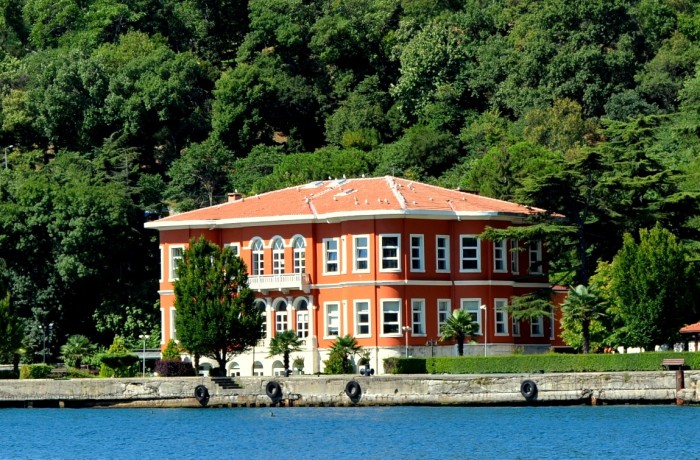
Nestled on the shores of Istanbul’s magnificent Bosphorus, between Emirgan and İstinye at a point known as Tokmak Burnu (Cannonball Cape), the Müşir Fuad Paşa Mansion stands out not only for its architectural beauty but also for the dramatic historical events it has witnessed. As an elegant representative of the Neo-classical style on the Bosphorus, this mansion was born from the dream of an Iranian ambassador, witnessed the betrayal of a King of Hejaz, and ended with the tragedy of a marshal known as “The Mad.” Having witnessed four different empires, the structure continues to maintain its place in history today by hosting diplomatic missions.
1. Construction as a Love Story: The Birth of the Mansion
The mansion’s story begins in the early 1870s with Iranian Ambassador Hacı Muhsin Han, who was appointed to Istanbul. Captivated by the enchanting atmosphere of Istanbul during his tenure, Muhsin Han decided to settle there permanently. He had this magnificent mansion built between 1870 and 1873 at one of the most beautiful points of the Bosphorus, on what is now Sakıp Sabancı Street.
However, this happy picture did not last long. Unable to resist the persistent calls of the Iranian government any longer, Muhsin Han was forced to return to his country in 1889-1890 after approximately 15 years of service in Istanbul. He left, selling his beloved mansion, and died a year later, longing for Istanbul. The mansion’s first era began not as a story of exile, but as the setting of a love story.
2. Changing Hands: The Era of Billuri Mehmet Efendi and Sharif Hussein
After Muhsin Han, the mansion was purchased by Billuri Mehmet Efendi, the Minister of Post and Telegraph of the period. However, facing financial difficulties, Mehmet Efendi had to sell this beautiful mansion without being able to enjoy it.
The third and most intriguing owner of the mansion was Sharif Hussein bin Ali. Kept in Istanbul by Sultan Abdulhamid II as a figure he did not trust, Sharif Hussein purchased and lived in this mansion. The most critical point emphasized by historians is that the plans for the Arab Revolt began to take shape within the walls of this mansion. After the declaration of the Second Constitutional Era in 1908, Sharif Hussein was appointed Emir of Mecca, sold the mansion, and moved to Arabia. A few years later, he would put the plans shaped in this mansion into action, launching a revolt against the Ottomans together with T.E. Lawrence (Lawrence of Arabia) and declaring himself King of Hejaz.
3. The Man Who Gave the Mansion Its Name: Marshal "Mad" Fuad Pasha
The fourth and namesake owner of the mansion was Marshal (Müşir) Fuad Pasha. Born in 1835, Fuad Pasha was distinguished by his military genius. During the 1877-1878 Ottoman-Russian War (the '93 War), he achieved a great victory by routing the Russians in the Elena region and was promoted to the highest military rank of "Müşir" (Marshal) for this success. He came to be known by the nickname "Deli" (The Mad) due to his courage and fearless demeanor on the battlefield.
However, the nickname "mad" came not only from his battlefield bravery. Fuad Pasha was reckless enough to openly criticize the reigning Sultan Abdulhamid II in European newspapers. This situation caused him great trouble. Fuad Pasha also had a longstanding feud with the Sultan’s chief spy, Fehim Pasha, over a woman. In 1902, following an armed clash at his mansion in Şehzadebaşı, he was sentenced to death. His sentence was commuted to exile, and the Pasha was kept under surveillance in Damascus for six years.
4. A Tragic Finale: Journey to the Gates of Madness
Fuad Pasha, who was pardoned with the declaration of the Second Constitutional Era, had all his ranks restored, and returned to Istanbul. In the final period of his life, he settled into this mansion he had purchased from Sharif Hussein. This mansion would no longer be a place of joyful entertainment, but of deep sorrow.
During the Balkan Wars and the Gallipoli Campaign, having lost three sons consecutively as martyrs, Fuad Pasha was crushed under this grief. Gradually losing his sanity, the Pasha withdrew into his mansion. Fearing he would be killed, he would not go outside and locked himself in a room. According to what he told those around him, he would cut up carpets and throw the pieces onto the boats passing by on the Bosphorus, living in delusions. One legend says he attempted suicide by cutting his wrists but failed. In 1931, at the age of 96, he passed away—in the same year as the mansion’s former owner, Sharif Hussein.
5. The Mansion Today: Restoration and Diplomacy
Following Fuad Pasha’s death, the mansion was sold by his heirs. In 1948, it began to be used as the Shipyard Directorate under the Maritime Bank. During this period, the harem section of the structure was demolished, and the building suffered great damage.
After the shipyard was removed, the mansion was transferred to the Ministry of Foreign Affairs. For many years, it served as the Istanbul headquarters of international organizations such as the Black Sea Economic Cooperation (BSEC) Organization and UNESCO. Today, it is used as the Istanbul Representation Office of the Ministry of Foreign Affairs and occasionally hosts weddings and private events.
The Müşir Fuad Paşa Mansion is like a painting, not only with its walls and windows overlooking the sea, but with the passions, betrayals, wars, and madness experienced within them. This magnificent structure, reflected in the waters of the Bosphorus, is one of the most important symbols carrying the turbulent spirit of the late Ottoman period to the present day.
Last Modification : 10/17/2026 4:37:21 AM