Exploring the Historic Treasures of Istanbul: Laleli Mosque and Beyond
Istanbul, a city where empires rose and fell, is home to some of the world’s most magnificent architectural wonders. Among these treasures are the Laleli Mosque, Taşhan, Tayyare Apartments, Koca Ragıp Pasha Library, Bodrum Mesih Pasha Mosque, and other historic landmarks that tell the story of Istanbul’s rich past.
Laleli Mosque: A Tulip-Adorned Masterpiece
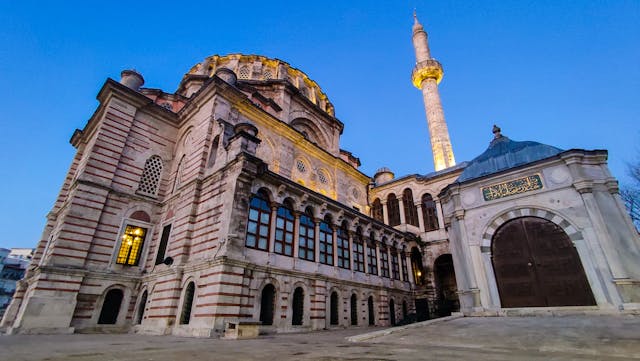
Commissioned by Sultan Mustafa III and constructed between 1760 and 1763, the Laleli Mosque stands as one of the sultan’s most significant architectural contributions. Despite building four mosques in Istanbul, none bear his name—instead, this mosque takes its name from Laleli Baba, a revered dervish whose name means "with tulips."
Designed by the renowned architect Mehmet Tahir Ağa, the mosque showcases exquisite Ottoman Baroque elements, including intricate tilework and elegant calligraphy. One of its most charming features is the birdhouses (kuş evleri) adorning its exterior, reflecting the Ottoman tradition of compassion toward nature.
Taşhan: From Janissary Barracks to a Bustling Marketplace
Adjacent to the Laleli Mosque lies Taşhan, a historic caravanserai built by Sultan Mustafa III to generate revenue for the mosque’s upkeep—much like the Grand Bazaar and Spice Bazaar. Originally known as Sipahi Han, it later became Katırcıoğlu Han, serving various purposes over the centuries.
At different times, Taşhan functioned as a timber warehouse and even as barracks for the Janissaries, the elite Ottoman soldiers. Today, it thrives as a bustling commercial hub, housing wholesale businesses specializing in textiles and leather goods. Its historical charm has also made it a popular filming location for famous Turkish TV series like "Binbir Gece" (1001 Nights) and "Muhteşem Yüzyıl" (Magnificent Century).
Tayyare Apartments: From Fire Relief to Aviation Legacy
In 1918, a devastating fire in Cibali, near the Golden Horn, destroyed 7,500 homes, leaving thousands homeless. In response, the Ottoman government initiated its first public housing project, resulting in the construction of Harikzedegan Apartments ("Disaster Victims’ Apartments"). Designed by the famed architect Kemaleddin Bey (whose portrait once graced the 20 Turkish Lira banknote), this building symbolized hope and recovery.
After the founding of the Turkish Republic, the apartments were repurposed to support the Turkish Aeronautical Association, leading to their renaming as Tayyare (Flight) Apartments. In 1985, the building was converted into a hotel, preserving its historical significance while adapting to modern needs.
Koca Ragıp Pasha Library: A Scholar’s Lasting Legacy
Facing the Laleli Mosque stands the Koca Ragıp Pasha Library, built in 1762 by Grand Vizier Koca Ragıp Pasha, a prominent statesman and poet during Sultan Mustafa III’s reign. Tragically, he passed away just 40 days after its completion, and the library also became his final resting place.
Koca Ragıp Pasha donated over 1,000 valuable manuscripts, making it a vital center of Ottoman scholarship. Unfortunately, the 1999 earthquake severely damaged the structure, and it is currently undergoing restoration under the supervision of the Süleymaniye Library.
Bodrum Mesih Pasha Mosque (Myrelaion): A Byzantine Relic Reborn
Originally constructed as the Myrelaion Monastery (meaning "fragrant like perfume") in the 10th century under Emperor Romanos Lekapenos, this site replaced an earlier Roman rotunda. It later served as a royal burial ground before being converted into a mosque by Grand Vizier Mesih Pasha during Sultan Bayezid II’s reign.
Locally known as Bodrum Mosque ("Basement Mosque") due to its underground chambers, it remains an intriguing blend of Byzantine and Ottoman architecture.
Aksaray: A District of Imperial Heritage
Pertevniyal Valide Sultan Mosque and High School
Built between 1869 and 1871 in honor of Pertevniyal Sultan, mother of Sultan Abdülaziz, this mosque was designed by the Balyan family—renowned architects of Ottoman palaces—and constructed by Italian architect Montani.
Next to the mosque stands one of Istanbul’s oldest high schools, which gained fame for its basketball team, winning numerous European competitions. The tomb of Pertevniyal Sultan is also located within the mosque’s courtyard.
Has Murad Pasha Mosque: A Byzantine Prince’s Ottoman Legacy
Has Murad Pasha, nephew of the last Byzantine Emperor Constantine XI, converted to Islam and rose to become Grand Vizier under Mehmed the Conqueror. Had Constantinople not fallen, he or his brother Mesih Pasha might have ascended the Byzantine throne. His contributions helped solidify the Ottoman Empire as the Third Rome. Tragically, he drowned in the Euphrates River during a campaign against Uzun Hasan of Akkoyunlu.
Fenari İsa Mosque: A Byzantine Church with a Storied Past
Originally the Constantine Lips Church, built in 907 under Emperor Leo VI, this structure was dedicated to the Theotokos Panachrantos ("Immaculate Mother of God"). Expanded in the 13th century by Emperor Michael VIII Palaiologos, it was later converted into a dervish lodge by Fenari Ali Efendi and finally into a mosque by Şeyh İsa.
For those exploring Byzantine heritage in Istanbul, this mosque is an essential stop, showcasing centuries of layered history.
From the Laleli Mosque’s Baroque elegance to the Byzantine echoes of Fenari İsa Mosque, these landmarks weave together the Ottoman and Byzantine legacies that define Istanbul. Whether you're a history enthusiast, an architecture lover, or a curious traveler, these sites offer a captivating glimpse into the city’s glorious past.
Plan your visit today and walk through the pages of history!