Karaköy and Galata
In Istanbul, a connection different from the bridges uniting the two shores of the Golden Horn operates silently underground: The Tünel. The story of Karaköy and Galata is incomplete without this steamy historical memory. This strategic point where the Bosphorus and the Golden Horn meet has been the intersection of trade, cultures, and faiths for centuries. Today, it is like an open-air museum in constant transformation, where traditional and modern, religious and secular, commerce and art are intertwined.
Karaköy: The Trade Port Whose Namesake is the Karaites
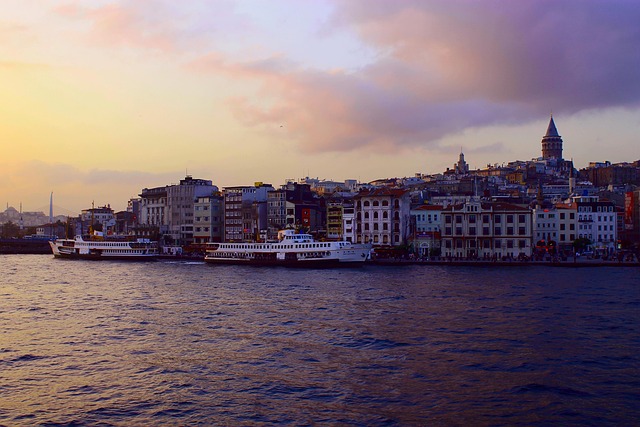
The district seems to have taken its name from two different sources throughout history. According to a common belief, it takes its name from a Turkmen tribe nicknamed "Kara" that settled here during the Ottoman period. However, another strong theory suggests that the name Karaköy comes from the Karaite Jews who began living densely in this area from the 15th century onwards. The Karaites are a branch of Judaism that accepts only the Torah and rejects oral tradition. It is highly probable that over time, the word "Karaim" transformed into "Kara" in the common vernacular, giving the neighborhood its name. This situation is evidence of the neighborhood's multicultural structure not just physically, but also in terms of its name. Karaköy has been one of the city's most important ports throughout history. One of the most important legacies of this port tradition is the Historic Ottoman Shipyard. Also known as the Golden Horn Shipyard, this massive facility was founded by Fatih Sultan Mehmet in 1455 and became the backbone of the Ottoman navy. For centuries, hundreds of ships that ensured Ottoman dominance in the Mediterranean were built here. Today, the restored shipyard area continues to exist as a living witness to Istanbul's maritime history. The quay is always bustling with city line ferries carrying hundreds of people every day, fishing boats, and tourist tours. The moment you step off the ferry pier, a rush, a hustle, and a colorful crowd greet you. The back streets of Karaköy host the Karaköy Bazaar, which forms its backbone. These streets are like an industry and trade museum. One street is dedicated solely to spools, another only to hardware stores, and yet another to professional kitchen equipment. Electricians, hardware stores, shops selling lighting materials... This place is still the working-class face of Istanbul, realistic and down-to-earth. However, in the last decade, Karaköy has undergone an incredible transformation. Historic buildings have been restored and converted into boutique hotels, luxury cafes, design stores, and art galleries. Banks Street (Voyvoda Street) is now the address of chic cafes and galleries filled with tourists from all over the world. This change has breathed new life into the neighborhood, while bringing traditional tradesmen and new businesses side by side, creating an interesting cultural mosaic. Karaköy is also a neighborhood of tolerance. Within a few steps, it is possible to see three major places of worship: the Arap Mosque, Saint Benoit Church, and the Neve Shalom Synagogue. Two more important religious structures add to this multicultural fabric: the Russian Rooftop Churches and the Underground Mosque. The Russian Rooftop Churches are among the city's lesser-known religious sites, established by Russian immigrants who came to Istanbul in the 19th century on the top floors of commercial buildings. The most famous of these is the Sveti Podiyenni Church, located on the top floor of a building on Voyvoda Street. These churches still stand as silent witnesses to the presence of the "White Russians" who fled the Russian Civil War in Istanbul. Another impressive site is the Underground Mosque. Located on the shore of the Golden Horn, right next to the Galata Bridge, this mosque was actually formed by converting a 6th-century Byzantine cistern into a mosque. It is believed that Abdullah, the son of the companion Amr bin As, and other companions were martyred in this area, and the cistern is considered their tomb. Worshiping underground among columns in a mysterious atmosphere offers a unique religious experience in Istanbul. Another important religious structure in the area is the Sokullu Mehmet Pasha Mosque. This masterpiece, built by Mimar Sinan in 1578, is one of Istanbul's most beautiful mosques. Its tiles, especially the Iznik tiles covering the qibla wall, reflect the pinnacle of Ottoman art. The mosque was built by Grand Vizier Sokullu Mehmet Pasha in the name of his wife, İsmihan Sultan. Located in the Azapkapı neighborhood, the mosque contributes to the region's cultural richness with both its architecture and historical significance. And of course, one cannot mention Karaköy without thinking of Karaköy Güllüoğlu. Serving since 1949, this establishment has become an indispensable part of the neighborhood as Turkey's most famous baklava maker.
Tünel: The World's Second Oldest Metro
Climbing the steep slope between Karaköy and Galata has been a challenging endeavor for both pedestrians and vehicles throughout history. It was to overcome this difficulty that the Tünel was built in 1875, holding the title of the world's second oldest metro after London's. This historic funicular line, only 573 meters long, has linked the destinies of the two neighborhoods by connecting Karaköy to Galata. However, this modern engineering marvel was not immediately accepted by everyone when it was first built. Some conservative and skeptical Istanbulites of the time were not warm to the idea of traveling underground. In fact, criticisms such as "Are we rats that we should go underground?" were recorded as one of the Tünel's most unforgettable historical anecdotes. This phrase was a striking expression of the caution and unease caused by stepping outside the familiar. The Tünel is not just a means of transportation; it is also like a time machine. From the hectic, commercial air of Karaköy, you board the Tünel's carriages and about a minute and a half later, when you emerge at Yüksek Kaldırım, considered the starting point of İstiklal Avenue, you find yourself in a different world. This short journey is akin to a symbolic passage between Istanbul's different layers. Over time, winning the trust and affection of the people, the Tünel has, despite those initial criticisms, become one of Istanbul's most indispensable means of transportation.
Galata: A Tower Story from the Middle Ages to the Present
When you exit the Tünel's upper station, the magic of Galata greets you. The heart of Galata is undoubtedly the Galata Tower. Having been one of the most iconic structures of the Istanbul skyline since its first tower was built in the 6th century, the tower today offers one of the most beautiful views of the city. The story of Hezarfen Ahmet Çelebi's famous flight adds a separate romance to this place. Galata was historically a Genoese colony. Remains of medieval walls and narrow, labyrinthine cobblestone streets evoke this past. Particularly, the Galata Mevlevihanesi (now the Museum of Divan Literature) sheds light on the neighborhood's cultural and spiritual life during the Ottoman period. Another interesting structure of Galata is the Komando Stairs. Thought to have been built in the 1850s, these steep and unusual stairs are one of the infrastructure works carried out in the area by important banking families of the period, like the Camondo family. It is estimated that they were built to facilitate transportation between the two neighborhoods before the construction of the Tünel. Today, the stairs have become both a transportation route and a popular spot frequently photographed on Instagram. It is said that they got their name from their steep structure resembling commando training exercises; these stairs add a distinct character to the area's historical fabric. However, the real magic of Galata lies in its streets. As you walk along Galipdede Street, you are greeted by music shops on one side and cafes and bars on the other. This street is also a pleasant walking route descending towards the world-famous Spice Bazaar and New Mosque. In recent years, Galata has undergone a transformation similar to Karaköy's. Historic buildings have been restored, and boutique hotels, concept cafes, design workshops, and art galleries have opened. Especially the streets around the tower have taken on an atmosphere that is lively at all hours of the day, filled with tourists and Istanbulites. Serdar-ı Ekrem Street, with its shops showcasing the products of local designers in their windows, is like an open-air shopping mall.
A Triple Symphony: Karaköy, Tünel, and Galata
Karaköy, Tünel, and Galata are like a triple symphony that complements each other. Karaköy is the strong, rhythmic, and realistic foundation of the symphony. The Tünel is the elegant transition rising from this foundation, uniting two different melodies. Galata is the most romantic, highest, and most breathtaking melody of the symphony. This trio is in constant change and transformation. While this situation sometimes brings concerns about the loss of traditional fabric, it is also proof that the city is a living, breathing organism. Karaköy, Tünel, and Galata are one of the best mirrors reflecting Istanbul's multi-layered identity. Here, in a single day, you can simultaneously experience the smell of the sea from a fishing boat, the sound of the historic carriages in the Tünel, the scent of freshly ground coffee, the damp air emanating from the stone walls of a historic building, and the excitement of modern art. For anyone who wants to understand Istanbul, this trio is at the forefront of places that must be seen, where you can feel the city's heartbeat most strongly.
Last Modification : 10/17/2026 4:01:38 AM