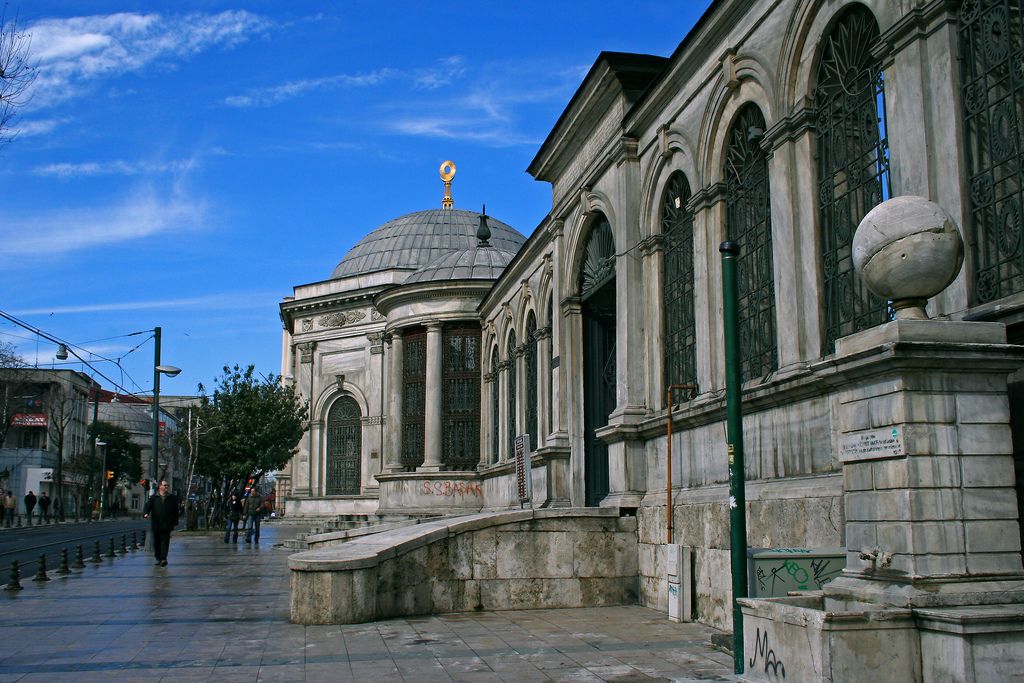
As you journey from the Milion Stone to Çemberlitaş in Istanbul's historic peninsula, you'll encounter numerous significant structures bearing traces of both Byzantine and Ottoman heritage. This route offers a magnificent blend of ancient and Ottoman imperial splendor. Here are the must-see historical and cultural stops along the way:
During the Byzantine period, this street was named Mese. It extended from Hagia Sophia all the way to the Seven Towers Dungeons.
In the Ottoman period, this street was called Divan Yolu (Council Road). The viziers heading to the divan (imperial council) meetings at Topkapı Palace would march in processions along this road.
Pudding Shop (Lale Restaurant)
Famous since the 1960s, the Pudding Shop was a legendary stop for Western travelers along the "Hippie Trail." Known for its traditional Turkish dishes and signature puddings, it remains a nostalgic culinary landmark.
Sultan Ahmet Köftecisi (Historic Köfteci Selim Usta)
Operating since 1919, Sultan Ahmet Köftecisi is one of Istanbul's most renowned meatball restaurants. Its historic ambiance and delicious köfte (meatballs) make it a beloved dining spot.
** Cevri Kalfa School**
This unique building on Divan Yolu was constructed in the 1820s by Sultan Mahmud II in gratitude to Cevri Kalfa, a servant who saved his life during a rebellion. It reflects Ottoman educational architecture.
** Firuz Ağa Mosque**
Just after setting off from the Milion Stone along Divan Yolu Street, you'll come across Firuz Ağa Mosque. Built in 1491 by Firuz Ağa, the head treasurer of Sultan Bayezid II, this mosque is one of the finest examples of single-domed mosques in Istanbul. Its simple architecture and peaceful courtyard make it stand out.
** Ruins of the Palace of Antiochos**
Near the Firuz Ağa Mosque, you'll find the remains of the Palace of Antiochos, an important Byzantine structure dating back to the 5th century. These ruins provide insight into early Byzantine-era Istanbul.
** Ruins of the Church of St. Euphemia**
Along Divan Yolu, the remnants of the Church of St. Euphemia can still be seen. This church, dedicated to the martyr St. Euphemia (who was executed in 303 AD in Chalcedon for refusing to make sacrifices to Ares), was once a major religious center in Byzantine times. Though only some wall fragments and foundation traces remain today, its historical significance is immense.
** Binbirdirek Cistern**
Further along the route, the Binbirdirek Cistern stands as one of the largest Byzantine-era cisterns. Built in the 4th century, it features 224 columns, and its name translates to "1,001 Columns." Today, it serves as a museum open to visitors.
** Şerefiye Cistern**
Constructed during the reign of Emperor Theodosius II in the 5th century, the Şerefiye Cistern resembles the Basilica Cistern but on a smaller scale. Recently restored, it offers an impressive subterranean experience.
** Tomb of Mahmud II**
Located near Çemberlitaş, this mausoleum houses the remains of Sultan Mahmud II, blending Neoclassical and Baroque styles. The tombs of Sultans Abdülaziz and Abdülhamid II are also found here. After the First World War and with the proclamation of the new Republic of Turkey, some of the members of the dynasty who were sent abroad were buried in this tomb when they passed away.
** Köprülü Family Cemetery and Library**
This cemetery holds the graves of the influential Köprülü family, including Grand Vizier Köprülü Mehmed Pasha. Adjacent stands the Köprülü Library, founded in 1661—one of Istanbul's oldest libraries.
11. Press Museum
Housed in a building from 1865, the Press Museum chronicles Turkish journalism from Ottoman times to the present, displaying rare newspapers, printing presses, and historical documents.
The short but history-packed walk from the Milion Stone to Çemberlitaş takes you on a journey from Byzantine traces to Ottoman grandeur. With ancient palaces, cisterns, church ruins, and Ottoman monuments, this route offers a step-by-step exploration of Istanbul's millennia-old past. Each landmark tells a unique story, showcasing the city's rich cultural heritage. As you walk, remember—every stone beneath your feet may reveal centuries of history!