Çemberlitaş
Çemberlitaş
Istanbul’s Ancient Sentinel Through the Ages
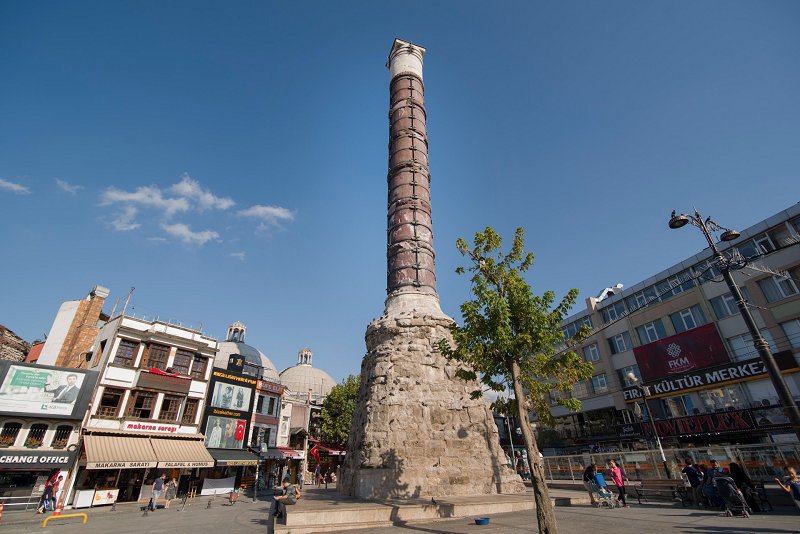
Rising defiantly in the heart of old Constantinople, the Column of Constantine (Çemberlitaş) stands as a weathered but unbroken witness to nearly 17 centuries of history. Erected in 330 AD by Emperor Constantine the Great, this monumental pillar once crowned the grand Forum of Constantine, a sprawling public square that pulsed with the political and spiritual life of Byzantium.
At its zenith, the column soared 57 meters high, its gleaming porphyry shaft topped by a radiant bronze statue of Constantine himself—transfigured as Apollo-Helios, the sun god, clutching an orb and scepter. Below, the forum bustled with senators, merchants, and citizens, flanked by the Senate House and the Praetorium, while statues of pagan deities like Zeus and Athena stood sentinel. This was no mere monument; it was a cosmic statement—a declaration of a new Christian capital built atop the bones of Rome.
Time, however, is relentless. The statue of Constantine crashed down in a storm in 1106, replaced briefly by a cross before Ottoman conquerors stripped it away. Earthquakes and fires gnawed at the column’s core, reducing its height to 35 meters and leaving its once-majestic porphyry drums cracked and scorched. By the 18th century, the Ottomans bound its wounds with iron hoops (çember), giving the pillar its modern Turkish name: Çemberlitaş, the "Hooped Stone."
Yet, beneath its scarred surface, legends whisper of sacred relics—fragments of the True Cross, nails from Christ’s crucifixion, and even the baskets from the Miracle of the Loaves and Fishes, all allegedly sealed within its base by Constantine’s mother, Saint Helena. Whether myth or truth, these tales bind the column to the divine, a thread connecting pagan Rome, Christian Byzantium, and Islamic Istanbul.
Today, Çemberlitaş stands at a crossroads of eras. The Ottoman footprints are everywhere: the Atik Ali Paşa Mosque (1496), the Çemberlitaş Hamam (1584) by Mimar Sinan, and the scent of spices from the old Tavuk Pazarı market. A short walk leads to the Grand Bazaar and the Sahaflar Çarşısı, where centuries-old books still trade hands.
But the column endures, silent and stubborn. It has seen empires rise and fall, gods replaced, and cities reborn. Its stones, scorched by fire and lashed by storms, still bear the weight of history—a testament to Istanbul’s eternal defiance of time.
Last Modification : 10/17/2026 3:32:19 AM