The Soul of Turkish Seafood
: A Deep Dive into Tradition, Flavor, and Ritual
Turkey’s relationship with seafood is not merely culinary—it is a cultural symphony, a ritual passed down through generations. Surrounded by the Black Sea, the Aegean, the Mediterranean, and the Marmara, Turkey’s waters have shaped a gastronomic heritage where fish is not just food but a way of life.
The Sacred Simplicity of Turkish Seafood
In Turkish seafood culture, less is more. Unlike Western traditions that rely on heavy sauces or marinades, Turkish chefs believe in letting the fish speak for itself. The philosophy is clear: if the fish is fresh, it needs nothing more than careful preparation.
A centuries-old practice involves cleaning fish in seawater, allowing the ocean’s natural salt to season it. No extra salt is added—just olive oil, a squeeze of lemon, and perhaps a sprinkle of herbs. This minimalist approach preserves the purity of flavor, turning each bite into an ode to the sea.
From the Streets to the Bosphorus: The Democratic Nature of Fish
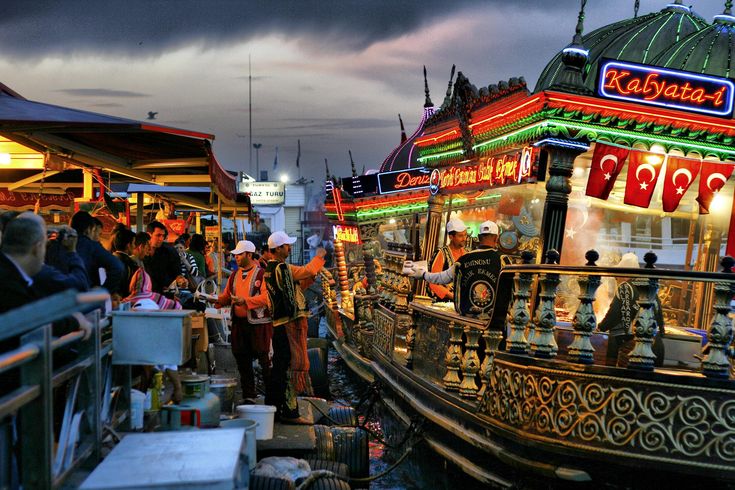
Turkish seafood culture thrives at every level of society. On one end, there’s balık ekmek—the iconic fish sandwich served from boats in Istanbul’s Eminönü district. Freshly grilled mackerel stuffed into crusty bread with onions and greens is a taste of maritime history. Nearby, in Karaköy, balık dürüm (fish wraps) draw long lines of eager eaters, proving that great seafood doesn’t require white tablecloths.
At the other end, upscale fish restaurants along the Bosphorus serve lüfer (bluefish) and levrek (sea bass) with panoramic water views. Yet, regardless of the setting, the essence remains the same: respect for the fish and the traditions surrounding it.
Rakı and Fish: A Ritual of Togetherness
No Turkish seafood experience is complete without rakı, the anise-flavored spirit known as "lion’s milk." When mixed with water, it turns milky white, symbolizing the slow, deliberate enjoyment of the meal. A fish dinner with rakı is not just eating—it’s a social ceremony.
The table fills with meze—small plates of octopus salad, tarama (fish roe dip), and marinated anchovies. Conversations flow as freely as the rakı, turning dinner into a three-hour affair. This is where friendships deepen, families reconnect, and strangers become friends.
The Market’s Rhythm: Dynamic Pricing and Freshness
Walk into a balık lokantası (fish restaurant) in Turkey, and you won’t find fixed prices. Instead, seafood costs fluctuate daily based on the balık hali (fish market). This transparency ensures that diners pay for true freshness, not an arbitrary menu price.
Locals know that the best fish comes from the cold waters of the Black Sea and the Bosphorus. Warmer southern waters produce different textures, making regional sourcing a crucial part of the experience.
Sustainability and the Future of Turkish Seafood
As overfishing and climate change threaten marine life, Turkey’s traditional seafood culture offers lessons in sustainability. Seasonal fishing, respect for natural flavors, and a preference for local catches all contribute to a more mindful approach.
** More Than a Meal, a Cultural Legacy**
Turkish seafood is not just about taste—it’s about time, place, and people. Whether biting into a humble balık ekmek by the Golden Horn or savoring grilled sea bass with rakı by the Bosphorus, you’re part of a tradition that honors the sea in every way.
To experience it is to understand Turkey itself—a nation where food is memory, ritual, and life itself.
Last Modification : 10/17/2026 4:39:27 AM