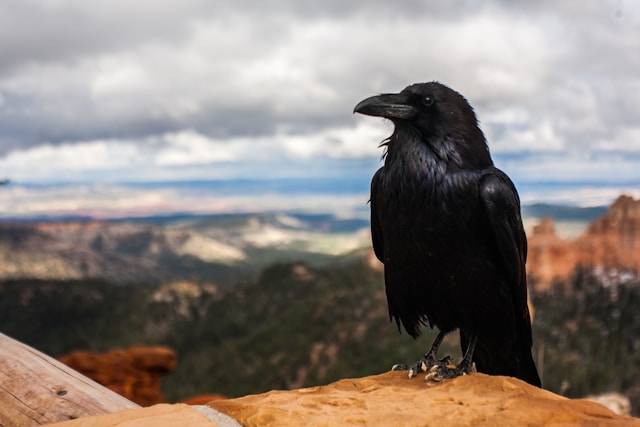
The Dark Reputation of Crows
Crows have long been shrouded in myth and superstition, often regarded as harbingers of doom, death, and misfortune across various cultures. But where does this ominous reputation come from? The answer lies in ancient mythology, human psychology, and the crow’s natural behavior.
The Mythological Origins of the Crow’s Bad Reputation
One of the most famous legends explaining the crow’s dark image comes from Greek mythology, involving the god Apollo and his lover, Koronis. According to the myth, Apollo, suspecting Koronis of infidelity, sent a white crow to watch over her. When the crow returned with news of her betrayal, Apollo’s fury was twofold. First, he punished the messenger, transforming the crow’s pristine white feathers into an eternal black. Then, in his wrath, he ordered Koronis’ execution, though he spared their unborn child, Asclepius, who would later become the god of medicine. This tale serves as a foundational myth for the crow’s association with misfortune. It explains not only why crows are black but also why they are seen as bearers of bad tidings—a reputation cemented by their role as witnesses to divine punishment.
Why Are Crows Associated with Death and Misfortune?
Beyond mythology, the crow’s connection to death and ill omens stems from both its behavior and human perception. As scavengers, crows are frequently found near battlefields, cemeteries, and decaying remains. Their presence in such grim settings led many cultures to view them as psychopomps—guides escorting souls to the afterlife—but also as grim heralds of impending death. Their appearance further fuels their sinister image. Jet-black feathers, sharp, knowing eyes, and rasping cries create an eerie impression, while their remarkable intelligence—once mistaken for otherworldly knowledge—adds to their mystique. Their habit of gathering in large, noisy flocks, known as a "murder" of crows, only deepens their association with doom. Cultural superstitions across the world reinforce this perception. In Norse mythology, Odin’s two ravens, Huginn (Thought) and Muninn (Memory), symbolized both wisdom and the inevitability of war’s carnage. The Celts linked crows to the Morrigan, a goddess of fate and battle, while European folklore held that a crow circling a home foretold death. Even in Native American traditions, where some tribes revered the crow as a clever trickster, others saw it as an omen of misfortune.
Reevaluating the Crow: Intelligence and Symbolic Duality
Despite their dark reputation, crows are among the most intelligent creatures in the animal kingdom. They fashion tools from twigs, solve complex puzzles, and even recognize individual human faces, remembering those who have wronged them. Their sophisticated communication includes distinct warning calls for different predators, demonstrating a level of social intelligence that rivals some primates. This brilliance has earned them a more nuanced role in certain cultures. In Japan, crows are seen as protectors, while some Native American traditions honor them as shape-shifters and teachers. Even in Western esoteric thought, crows sometimes symbolize transformation and hidden knowledge rather than mere doom.
Beyond the Bad Omen
The crow’s reputation as a dark omen is deeply rooted in myth, behavior, and human fear of the unknown. Yet, their intelligence and adaptability suggest a far more complex symbolism. They are not merely messengers of death but also guides, guardians, and survivors—creatures that thrive where others falter. Perhaps the true lesson of the crow is that darkness does not always mean evil. Sometimes, it signifies wisdom, resilience, and the unseen threads that bind life and death together.
Last Modification : 10/16/2026 3:05:58 AM