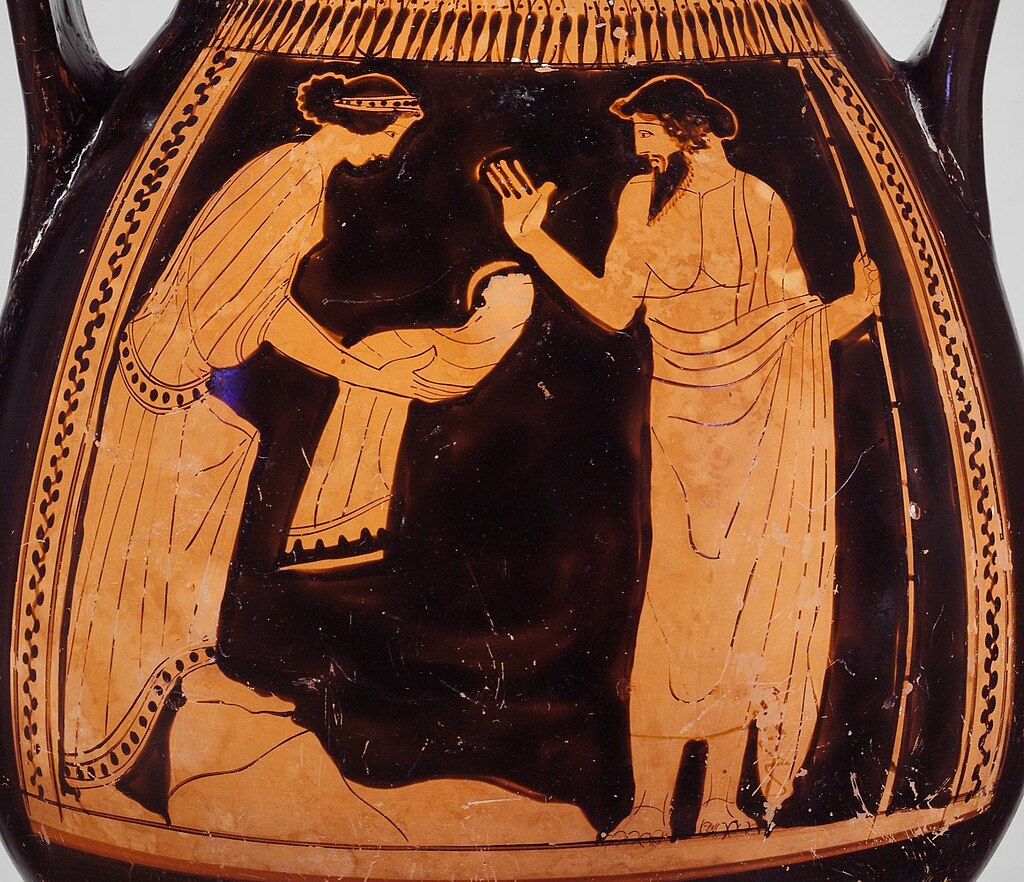
The Birth of Cronus
Ancient mythologies carry the deep imprints of humanity's collective unconscious. The story of Cronus' birth and his overthrow of his father Uranus in Greek mythology is more than just a tale of power struggle—it is a profound allegory about the ordering of the universe. This myth encapsulates the conflict between feminine and masculine principles, the dawn of time, and the symbolic transition from chaos to cosmos.
Gaia and Uranus: The Entangled Chaos
In the beginning, there was no separation between Gaia (Earth) and Uranus (Sky). They were locked in an intimate embrace, much like two lovers. Yet this closeness also meant Uranus’ domination over Gaia. He imprisoned her monstrous offspring—the Hecatoncheires and the Cyclopes—deep within the earth, denying them life. This oppression fueled Gaia’s rage, and she sought vengeance through her son Cronus.
Cronus’ Rebellion: The Symbolic Overthrow of Power
Even in his mother’s womb, Cronus was aware of his father’s tyranny. But how could an unborn child defeat a god? Gaia gave him a sickle and instructed him to wait for the right moment. In myth, the phallus was not merely an organ but a symbol of dominion and procreative power. When Uranus descended to unite with Gaia, Cronus seized the opportunity and castrated him, severing his testicles. This act was not just a son overthrowing his father—it was the triumph of the feminine will over masculine oppression.
The Ascent of the Sky: The Separation of the Cosmos
Uranus’ agonized scream altered the fundamental order of the universe. In reflexive agony, he recoiled and sky and earth were forever split apart, creating the first void between them. This moment marked the transition from chaos to order. Gaia and Uranus were now separate, and the universe began to expand—time itself had begun to flow.
The Lord of Time: Cronus and Chronos
The name Cronus (Kronos) bears a phonetic resemblance to Chronos (Time). Some interpretations suggest that this event marked the beginning of temporal existence. Cronus’ rise to power symbolizes the cyclical nature of life and the dawn of history. A parallel exists in Sumerian mythology, where Enlil similarly separates heaven and earth, reinforcing this universal motif.
The Deeper Meaning of Myths
Cronus’ story is not merely a divine feud—it is a metaphor for the transformation of power, the clash of feminine and masculine forces, and the structuring of the cosmos. Mythological symbols reflect humanity’s subconscious fears, desires, and quest for societal order. Cronus’ overthrow of his father was not just a dynastic shift but the beginning of a new age—irreversible and inevitable, much like the passage of time itself.
Last Modification : 10/17/2026 5:37:27 AM