Halet Çambel Mansion
Located on the Arnavutköy shoreline, one of the pearls of the Bosphorus, the Halet Çambel Mansion is more than just a residence. It stands as a witness to a rich history spanning from Ottoman modernization to the enlightenment ideals of the Republic, from architectural transformations to cultural philanthropy. With its wooden bay windows, changing colors, and garden, this structure is also a striking example of the unfortunate transformations along Istanbul's coastline. This article discusses the mansion's story from its construction in 1820 to the present day, covering its architecture, prominent personalities, and current function.
1. From the Ottoman Era to the Republic: The Construction and Ownership History
The foundations of the Halet Çambel Mansion were laid during the reign of Sultan Mahmud II (1808-1839). Built in 1820 in the Empire style using wooden and bağdadi (lathe and plaster) technique, the structure was commissioned by the chief gardener of Armenian origin of the period. Also known among the public as "Karnız Mansion," the building etched its name into history shortly after its construction by hosting the German General Helmut von Moltke (1836), who was tasked with modernizing the Ottoman army.
The mansion remained with the heirs of the chief gardener until the 1930s. It was then purchased from the heirs of this family, who had emigrated to France, by Remziye Hanım, the daughter of İsmail Hakkı Pasha, who was then the ambassador to Berlin. The transformation that truly defined the mansion occurred in 1965. Inherited from Remziye Hanım, the property came into the possession of Prof. Dr. Halet Çambel, Turkey's first female Olympic athlete and a pioneering archaeologist.
2. Halet Çambel and Nail Çakırhan: The Couple Who Gave Soul to the Mansion
Halet Çambel's association with the mansion goes beyond mere ownership. Çambel made history in Turkish sports as the first female athlete to represent Turkey at the 1936 Berlin Olympics. Subsequently, she became a world-renowned scientist in the field of archaeology. For over half a century, the mansion served as both a living space and an intellectual hub for Çambel and her husband, Nail Çakırhan, the famous architect and poet who received the Aga Khan Award for Architecture. The years this couple spent in the mansion added significant cultural and scientific depth to the structure.
3. Architectural Features and Changes Over Time
While reflecting the style of the 1820s when it was built, the mansion's architecture has gained a layered character through later additions.
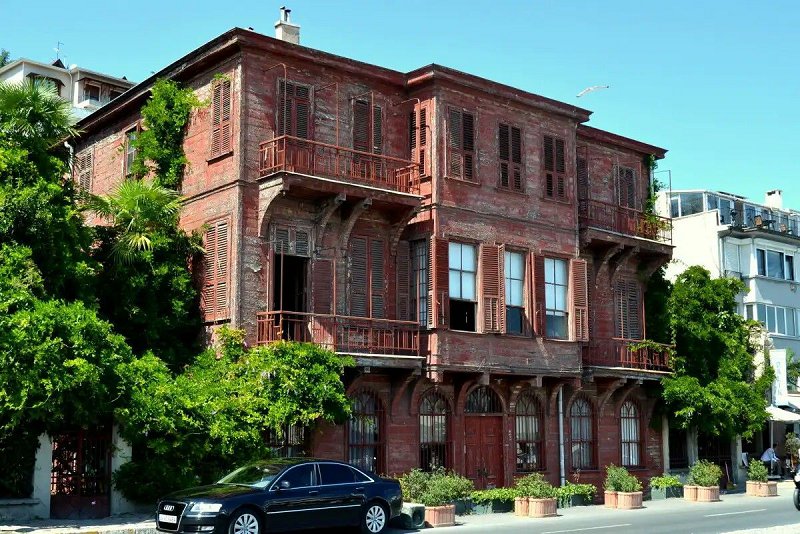
- Plan and Facade: The wooden-bağdadi mansion draws attention with its bay windows that project towards the sea. The balconies on both sides of the bay windows were added in 1930. The oval design of the door and window tops on the ground floor is a typical feature of the Empire style.
- Its Garden: A strawberry garden was created behind the mansion due to Arnavutköy's famous strawberries. Over time, this garden was enriched with additional structures such as a laundry room, kitchen, toilet, bathroom, and storage. The Halet Çambel Mansion is the only mansion in Arnavutköy with a garden.
- Color Transformation: While the mansion had a milky coffee color on its exterior until 1965, it gained its current red ochre color during a restoration after that date. The architect for this restoration was the late Turgut Cansever, an important figure in Turkish architectural history.
4. An Unfortunate Transformation and Rebirth as Cultural Heritage
Despite its high architectural and historical value, the Halet Çambel Mansion is remembered as one of Arnavutköy's unfortunate mansions. The coastal road built in front of the mansion severed its direct relationship with the sea, transforming it from a classic 'yalı' (waterfront mansion) into a 'sahilhane' (beach house).
Despite this drawback, the mansion's greatest fortune was its donation to Boğaziçi University in 2004 by Halet Çambel and Nail Çakırhan. Following a comprehensive restoration, the building began serving researchers within the university under the name "Halet Çambel and Nail Çakırhan Center for Archaeological and Traditional Architecture Research." This transformation allowed the mansion to evolve from private ownership to a public and scientific function.
5. A Valuable Artifact: Sultan Reşad's Carpet
A special object found inside the mansion reinforces its historical significance: a wall carpet gifted to İsmail Hakkı Pasha by Sultan Reşad. This carpet reflects the courtly gift-giving culture of the period and demonstrates that the mansion was not merely a summer residence but also a place hosting state dignitaries.
Last Modification : 4/18/2026 7:13:15 AM