Emine Valide Paşa Mansion
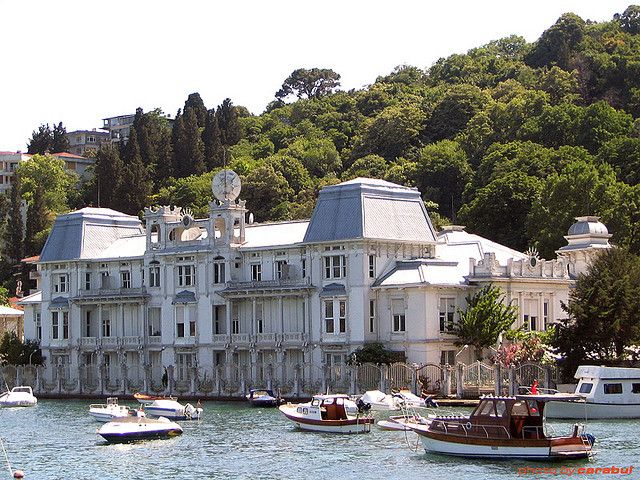
Among the magnificent waterfront mansions lining the shores of Bebek, one of the most beautiful neighborhoods on the Bosphorus, there stands a structure that distinguishes itself with both its architectural elegance and the stories it carries from the past: the Emine Valide Paşa Mansion. Currently serving as the Egyptian Consulate, this building is also known by various names, including "Hıdiva Palace," "Hıdiv İsmail Paşa Mansion," "Valide Paşa Mansion," and "Egyptian Consulate Waterside Palace." Yet, for those who know its history, this place lies at the very heart of a grand narrative of Ottoman splendor, personal grievance, and loyalty that stretches from the Empire to the Republic.
From First Construction to a Gifted Palace
On the site of the current mansion, there originally stood the yalı of Dürrizade Mehmed Ataullah Efendi, a sheikh ul-Islam during the reign of Sultan Abdülhamid I. Built in 1781, this initial structure was rebuilt for the second time by Rauf Paşa, one of Sultan Mahmud II's grand viziers. Later renovated by Ali Paşa, a grand vizier of Sultan Abdülaziz, the mansion came to a turning point after his death.
Sultan Abdülhamid II purchased the mansion and gifted it to Emine Hanım, the mother of Abbas Hilmi Paşa, the last Khedive of Egypt. From that moment on, the mansion became inseparable from the story of that unforgettable woman. Emine Hanım went down in history as the only woman to ever receive the title "Paşa" in the Ottoman Empire. This title was bestowed upon her personally by Sultan Abdülhamid II. In Istanbul, she was widely known as "Valide Paşa" (Mother Paşa).
Emine Valide Paşa commissioned the famous architect Raimondo D'Aronco to rebuild the mansion for the third and final time, giving it its current magnificent form.
Architectural Elegance and Symbols
This Art Nouveau-style mansion was not originally designed as a consulate or embassy. As one of the largest yalıs on the Bosphorus, the structure measures 64 by 28 meters, and its quay stretches 76 meters in length. The two-story mansion is organized with the harem (private quarters) on the southern side and the selamlık (men's quarters) on the northern side. A symmetrical garden pavilion was located at the exact point where the harem and selamlık met.
One of the first striking elements is the high roof on the right and left sides. The abundant plant motifs on the staircases, the ivy-like decorations wrapping around the railings, the volutes, and the Corinthian column capitals all showcase the aesthetic taste of the era. The column capitals are further adorned with lotus flowers in the Egyptian style. On the land side, there are four observation towers, while the first floor facing the sea has 10 rooms, and the second floor facing the sea has 9 rooms.
One of the most remarkable details is located at the very center of the roof: a round medallion in the shape of sunburst rays, featuring the tughra (imperial signature) of Sultan Mahmud II. Inside the tughra, written in Arabic script, are two of God's names: "Ya Hafız, Ya Emin" (O Protector, O Trustworthy).
A Woman's Pride and the Legends of Donation
The last owner of the mansion, Emine Valide Paşa, lived here for many years with her son, Abbas Hilmi Paşa. After the de facto and official end of the Ottoman Empire and the establishment of the Republic of Turkey, the legends begin.
According to one account, Emine Valide Paşa intended to donate this magnificent waterfront mansion to the Republic of Turkey. However, in the early years of the Republic, titles such as "ağa" and "paşa" were banned. It is said that Valide Paşa became furious when official correspondence addressed her as "Emine Hanım from Bebek" instead of "Paşa." Due to this resentment, she allegedly abandoned her plan to donate the mansion to Turkey and instead transferred it to the Egyptian government.
Another legend claims that Valide Paşa, saddened by the fact that Egypt did not have an embassy building in Istanbul, allocated the mansion to Egypt. She stipulated, however, that she would continue to live in the hunting lodge in the mansion's garden until her death.
Regardless of which story is true, upon her death on June 15, 1931, the hunting lodge where she resided was demolished according to her will. The fate of the mansion itself, however, was sealed. Having fallen into considerable disrepair, the structure underwent a 2.5-year restoration, which was completed in 2011, restoring it to its former glory.
The Emine Valide Paşa Mansion is not merely a seaside palace; it is a testament to one woman's determination, a symbol of the late Ottoman era, and a bridge of loyalty between two nations. Every morning, with its silhouette reflected in the waters of the Bosphorus, it continues to stand as a silent salute to the past.
Last Modification : 10/16/2026 3:06:59 AM