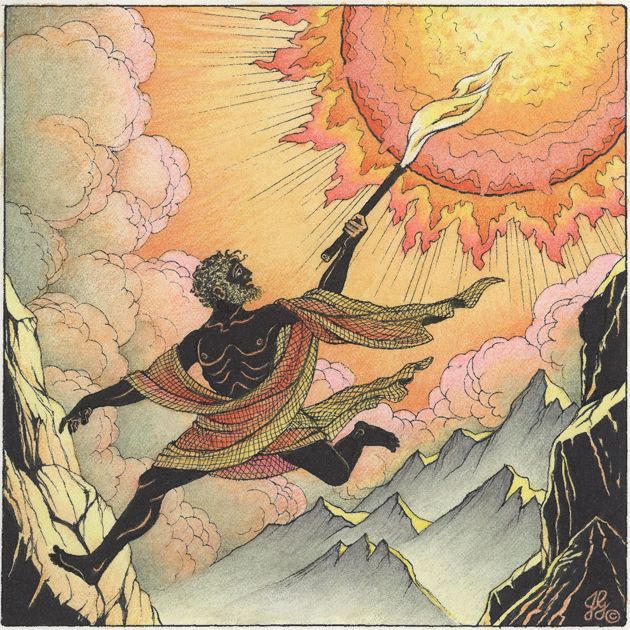
Prometheus
In the rich tapestry of Greek mythology, Prometheus stands as a towering figure—a defiant champion of humankind, whose cunning and sacrifice earned him both reverence and eternal punishment. Though Hesiod’s Theogony does not depict him as the creator of humanity, it portrays him as their greatest benefactor, a titan who dared to outwit Zeus himself.
The Deception at Mecone
Prometheus’ first act of rebellion came during a sacrificial feast meant to establish the division of offerings between gods and mortals. He presented Zeus with two portions: one concealed the choicest cuts of meat beneath an unappetizing layer of ox stomach, while the other hid bare bones beneath glistening fat. Zeus, deceived by appearances, chose the latter, only to discover the trickery too late. Enraged by Prometheus’ cunning and the advantage it granted humanity, the king of gods retaliated by withholding fire from mortals, leaving them in darkness and cold.
The Theft of Fire
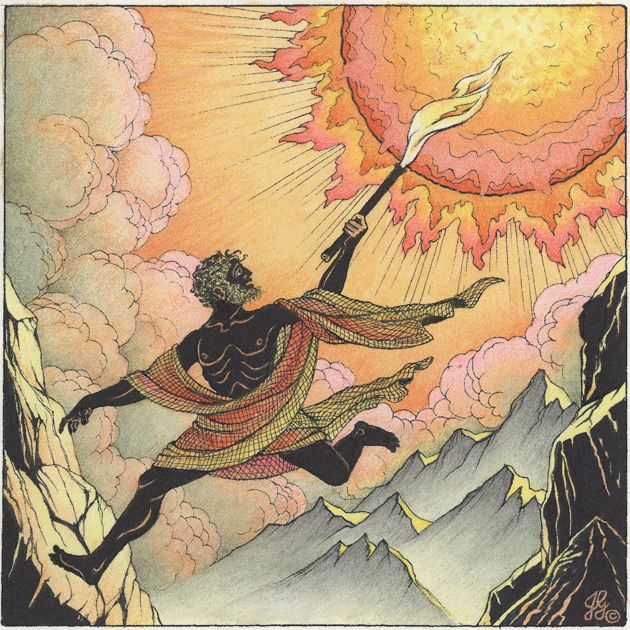
Undeterred, Prometheus intervened once more. Defying divine decree, he ascended to the heavens and stole fire—either from the chariot of the sun or Hephaestus’ forge—delivering its life-giving spark to mankind hidden within the hollow of a fennel stalk. This act of defiance granted humanity not just warmth, but the means to cultivate civilization, craft tools, and rise above their primal state.
The Wrath of Zeus

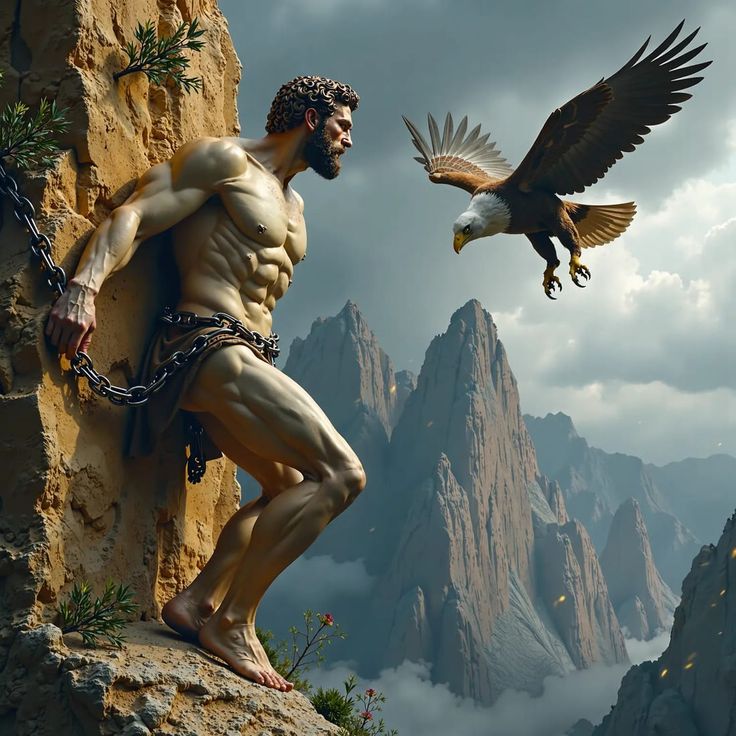
Zeus, infuriated by this second betrayal, devised a twofold punishment. For mortals, he crafted Pandora, the first woman, whose infamous box unleashed suffering upon the world. For Prometheus, he ordained an eternity of torment. The titan was bound to the desolate peaks of the Caucasus Mountains with unbreakable chains, where an eagle—born of the monstrous Typhon and Echidna—feasted daily on his regenerating liver. Zeus swore upon the River Styx that Prometheus would never be freed, his agony unending.
The Intervention of Heracles
Yet destiny had other plans. Years later, the hero Heracles, traversing the Caucasus during his labors, took pity on the suffering titan. With a single arrow, he slew the eagle and shattered Prometheus’ chains. Though Zeus could not openly defy his own oath, he permitted the liberation on one condition: Prometheus must forever wear a ring forged from his chains and carry a fragment of the cursed rock as a reminder of his defiance.
Legacy of the Defiant Titan
Prometheus’ tale transcends myth, embodying the eternal struggle between authority and rebellion, punishment and sacrifice. His gifts to humanity—fire and knowledge—symbolize enlightenment and progress, while his suffering serves as a testament to the cost of defiance. Even in chains, he remained unbroken, a beacon of resilience against tyranny. Thus, Prometheus endures not merely as a figure of ancient lore, but as an enduring symbol of human ingenuity and the unyielding spirit of resistance.
Son Güncellenme : 02/09/2026 15:31:48